22.1 What is cable logging or cable harvesting?
22.1.1
Cable logging is a method of moving stems from a felling site to a landing area. It uses a stationary machine with powered drums/winches, booms or towers, blocks, wire ropes and butt rigging/head gear. Harvested stems may be fully or partly suspended for all or part of the yarding distance.
22.1.2
Cable logging is mainly used to harvest timber from steep slopes where conventional retrieval methods are unsuitable due to the risk of mobile plant rolling over. It can also be used in broken terrain, where the ground is wet or soft, or where logs need to be lifted over environmentally sensitive areas.
22.1.3
There are many different types of cable logging machines and rigging systems. To find out more about the different systems and the specifics of their rigging, see industry guidance, see Resources webpage
22.1.4
Breaking out is a key part of the cable harvesting process. For the breakers-out, it involves stopping and positioning the rigging, hooking on the drag (the stems to be extracted), and after retreating to a safe position, signalling for the break-out of the drag by the yarder and then watching it until it reaches the landing.
22.1.5
Manual breaking out is one of the most hazardous tasks in forest harvesting. You must eliminate risks from manual breaking out so far as is reasonably practicable (for example, by using another harvesting method). If you cannot eliminate the risks, you must minimise them so far as is reasonably practicable
22.1.6
This section is split into five parts:
- general principles of cable logging
- setting up the yarder
- PPE
- communication
- safe breaking out.
22.2 General safety principles
22.2.1
To protect workers, the basic safety principles are to:
- stop operating if cable logging becomes dangerous because of bad weather conditions such as high wind or poor visibility
- keep everyone in a safe area away from moving lines, rigging, loads until the rigging or loads have completely stopped (safe retreat positions)
- keep everyone outside the bight of tensioned running lines at all times
- run lines in a straight line and ensure they are not obstructed or binding on anything
- be aware of chain shot if a mechanised faller is being used (see Section 20.3.8)
- make sure tree-felling activities are at least two tree-lengths from yarding lines and breakers-out unless fully mechanised with no workers at risk
- make sure all static ropes are marked (see Section 15.7).
22.2.2
Every person entering an operational area:
- notifies the supervisor or foreman before entering the operational area
- wears the appropriate PPE as required by the PCBU
- only enters the operational area when they have been acknowledged or signalled that it is okay to enter
- takes care when approaching workers engaged in any operation
- stays aware that workers wearing hearing protection may not hear them.
22.2.3
When on the landing, make sure workers stay in the designated safe area and clear of:
- all working machinery
- swinging or suspended logs or stems
- trucks and trailers being loaded or unloaded (see Part F).
22.2.4
Before moving into another work area, make sure the affected machine operators are contacted, and that permission is signalled back.
22.3 Setting up a safe yarder
22.3.1
A PCBU who manages or controls plant at a workplace must, so far as is reasonably practicable, ensure that the plant is without risks to the health and safety of any person.
22.3.2
PCBUs must ensure, so far as is reasonably practicable, the provision and maintenance of safe plant and the safe use, handling, and storage of plant.
General safety principles for yarders
22.3.3
Take the following actions:
- Rig all cable logging installations in accordance with the manufacturer's specifications or industry-specified requirements, whichever is the higher standard.
- Make sure all yarders are securely anchored before yarding operations start. Complete an anchor plan.
- Put the yarder on solid, level ground and protect from pooling rainwater. Make sure outriggers and levelling pads have a stable base.
22.3.4
Make sure guylines used to stabilise the yarder are at least the size, strength and number recommended by the machine manufacturer. Follow industry best practice in the placement and angles of guylines. For industry guidance, see Resources webpage
- Have certified falling object protective structures (FOPS) and operator protective structures (OPS) on yarder cabs, and chain shot protection if required. An exception can be made where cable yarders are remotely operated, and the operator is not located on the yarder.
- Securely guard or totally enclose transmission, machinery and hazardous moving parts on yarders. For industry guidance, see Resources webpage
- Maintain control levers, pedals, brakes and other equipment on yarders so they are in safe working order. Make sure yarder consoles have a safety lock-out system for when workers are working around ropes and rigging.
- Have non-slip pad surfaces on foot-operated mechanisms such as brakes.
- Securely fix ropes to the winch drum. Have ropes long enough to ensure that there are four or more complete wraps of rope on the drum in every working position.
- Use lagged drums, a guide pulley, tool, iron bar or other mechanical or manual means to guide ropes onto drums. Make sure that no part of a worker's body is in direct contact with the rope.
- When moving a yarder with an integral tower, lower or support the tower according to the manufacturer's guidelines so the machine remains stable. Assess the access for hazards before moving and have a qualified person guide the yarder operator when moving.
- Do not move yarders until everyone is in a safe area.
Guylines
22.3.5
When setting up guylines:
- Position and use the guylines used with yarding equipment according to the plant manufacturer's specifications.
- Make sure the number of guylines attached to integral steel towers are at least the minimum recommended by the equipment manufacturer.
- Do not splice guylines together. When they are connected to extensions or anchors, use one of the following:
- spliced or swaged eyes with shackle connectors with all splices tucked at least three times on each side
- white metal babbitted or swaged ferrules with double-ended chokers between extensions.
- Make sure guyline connections have at least 1.5 times the breaking strength of the guylines themselves.
- Make sure load bearing guyline angles are 45 degrees or less when measured vertically. If suitable anchors are unavailable, or the terrain is so steep that the guyline angle exceeds 45 degrees, rig an extra guyline to oppose the load.
- Make sure guylines are securely tightened and locked in position while the tower is in use and adjusted to share the load as equally as possible.
- Make sure shackles used in the rigging are rated appropriately and the pins are secured.
Anchors
22.3.6
Securely anchor all skylines, guylines and tailrope blocks to one of the following:
- suitable-sized stumps or combinations of stumps capable of resisting the forces applied to the stump, for example:
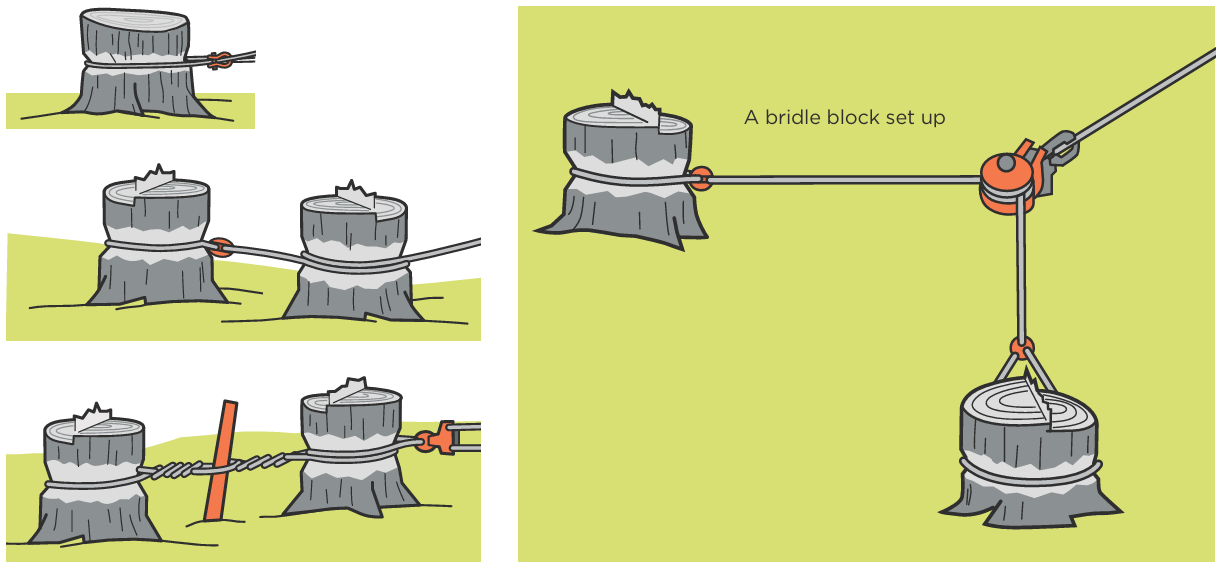
Figure 27 shows four examples of stump anchor set ups:
Example 1: A rope is secured around a single notched stump.
Example 2: A rope is secured around a notched stump, then it is looped around another nearby notched stump.
Example 3: A rope is secured around a notched stump and a stake is used to create a twister tie back to another nearby stump, keeping tension on both stumps.
Example 4: A bridle block tied out between two stumps, at less than 45 degrees, distributes the load evenly between both stumps.
End of text alternative.
Figure 27 is adapted from Safe Work Australia’s guidance: Forestry: Guide to managing risks in cable harvesting (2013)(external link).
- deadman anchors of sufficient size and buried to an adequate depth, for example:
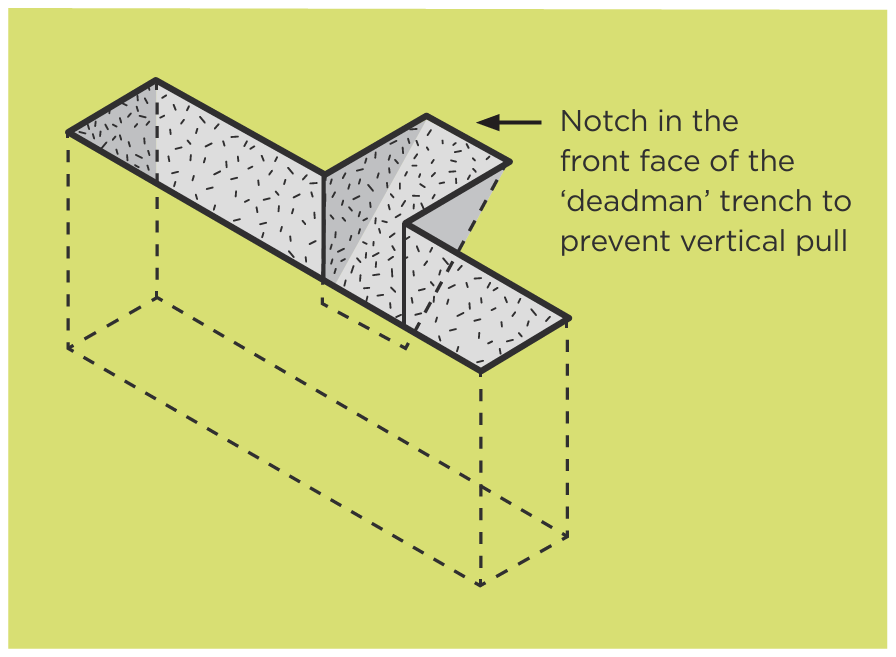
Figure 28 is adapted from Safe Work Australia’s guidance: Forestry: Guide to managing risks in cable harvesting (2013)(external link).
- suitable mobile plant anchors that are of sufficient size and correctly braced, for example:
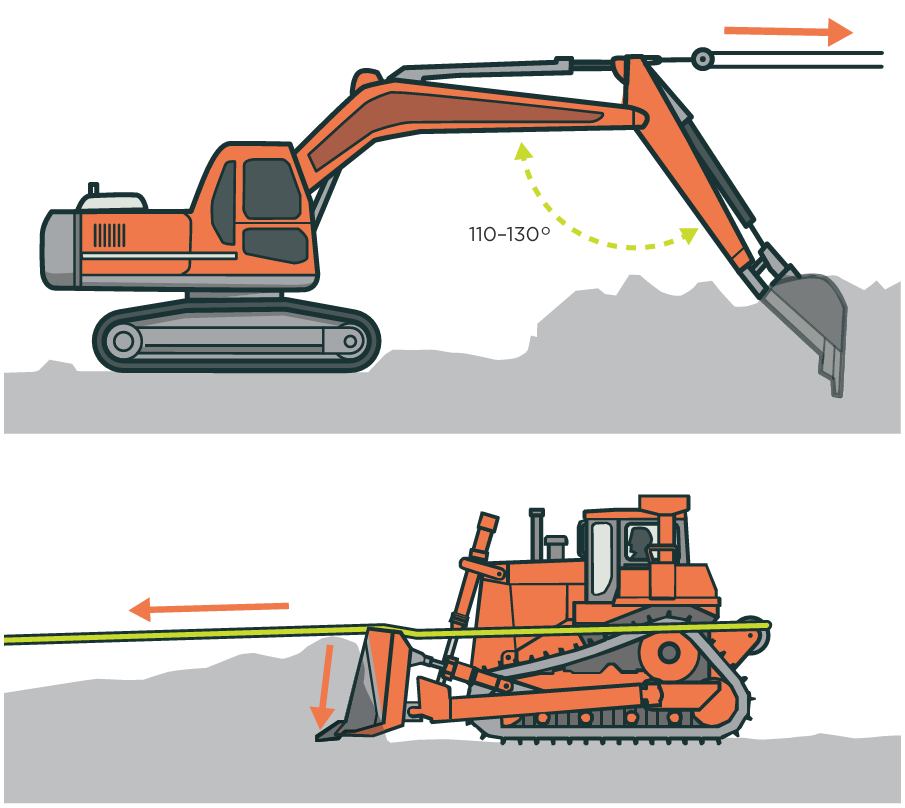
Figure 29 is adapted from Safetree Best Practice Guidelines for Cable Logging (2005)(external link).
- correctly installed artificial anchors providing sufficient strength.
22.3.7
Make sure the guyline anchor locations meet the manufacturer's specifications for yarder set-up.
22.3.8
Make sure that no worker goes within 15m of a live anchor stump once an anchor is rigged, unless they are in communications with the hauler operator.
22.3.9
Do not use standing trees as anchor points unless a risk assessment has been carried out and it is safe to do so.
Selecting stump anchors
22.3.10
A stump anchor is the stump of a felled tree which has been selected as suitable to use as an anchor.
22.3.11
They may be used for:
- hauler guylines
- skyline anchors
- tailspar and intermediate support guylines
- block anchors
- anchoring other machines and equipment.
22.3.12
It is hard to predict what holding power a stump has, but this general guidance applies.
What to look for in a 'good' stump
22.3.13
Pick a stump that:
- is freshly cut (less than 6 months old)
- is in deep and firm soil
- has a sufficient height of solid wood above the planned notch (for example, at least 30cm)
- has a larger diameter stump (for example, a 60cm diameter stump may hold approximately four times as much as a 30cm stump).
What to avoid in a stump
22.3.14
Always assess the risk when choosing stumps. In general, do not use stumps that:
- have been damaged or disturbed during road or landing construction
- are in wet swampy areas, water tables and water sumps. Stump (and soil) strength decreases as a soil gets wetter
- are located in subsidence areas, shallow, loose, or friable soil. In particular, where there is only a thin soil overlying rock
- have started to rot. The root systems in stumps over 6 months old have started to rot, and their strength may have reduced
- have been previously used as anchors. These may be in a weakened state despite looking sound
- come from wind-damaged or heavily leaning trees
- have been cut too low to allow adequate holding wood above the attachment point
- have been partially pulled out of the slope
- are in a steep face, facing the hauler.
Notching a stump
22.3.15
When notching the stump:
- notch all stump anchors so that the rope is held around the anchor
- make sure notches are cut to a suitable depth and shape (for example, 2 times the rope diameter in width and 1.5 times the rope diameter in depth)
- make sure the notch is as close to the ground as possible – do not cut off the roots
- make sure there is at least 30cm of solid wood above the notch
- make sure the notch is cut on the same angle as the guyline under tension.
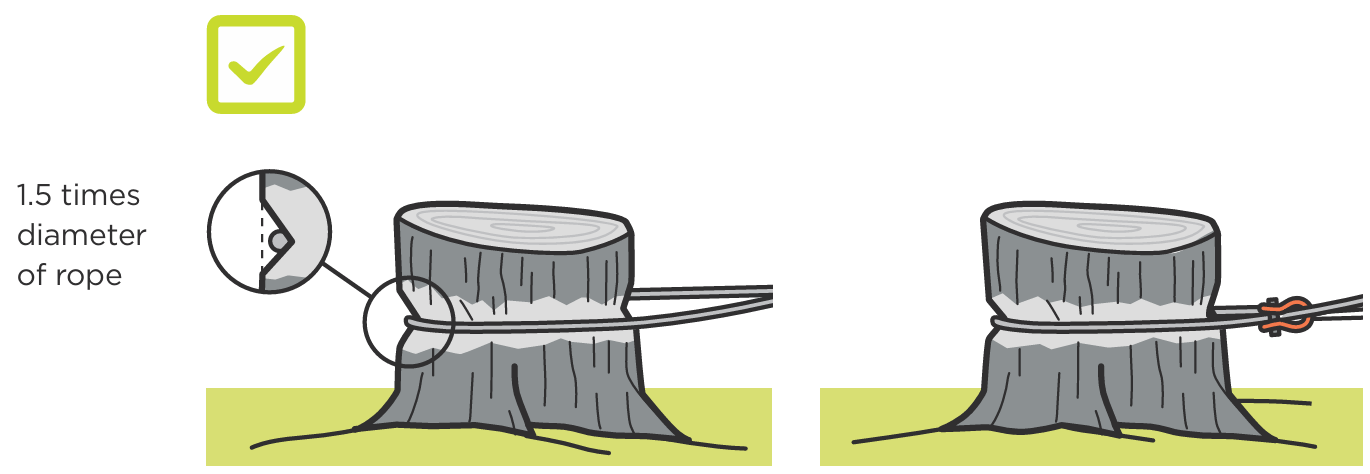
Figure 30 is adapted from Safe Work Australia’s guidance: Forestry: Guide to managing risks in cable harvesting (2013)(external link).
Deadman anchors
22.3.16
Deadman anchors are logs buried in the ground to provide an anchor point when suitable stumps are not available.
22.3.17
If using a deadman anchor, make sure:
- the logs are properly installed and of a strength, length and diameter to withstand the load to be imposed
- the log size and design of the installation takes into account the:
- soil conditions
- slope and angle of the ground
- angle of pull on the guyline
- size of the yarder
- rigging system being used
- trenches for deadman anchors are at right angles to the line of pull and have a vertical front wall
- the strop connecting the rope to the deadman anchor:
- passes around the deadman and has both ends evenly protruding from the ground
- is positioned so that the ends share the load equally
- is at least the strength of the rope that it is being attached to
- has both eyes of the strop attached to the rope with a shackle
- the deadmen are checked to make sure they have been installed properly.
Rigging gear
22.3.18
When setting up rigging consider the following:
- make sure all shackles are made of high-tensile fitted with high-tensile pins and are certified
- make sure that all shackles are rated equal to, or higher than, the rigging gear (ropes) they are connected to
- secure the pins of hanging shackles with a molle grommet or split pin
- make sure guyline shackles have their pins on the yarders side of the connection unless they are on mobile plant used as a tailhold, where the shackles are reversed
- only use hammerlocks in place of shackles when they have an equivalent or greater safe working load than the shackle they are replacing
- make sure all shackles, rigging screws and turnbuckles:
- are tested and marked with their safe working load
- have a breaking strength at least equal to the rope to which they are rigged
- fit yarder towers with a strop or other safety device which can contain the fall of operating ropes and tackle if a failure of the lead block, blocks or securing tackle occurs
- only undertake tower maintenance when the tower is down
- if climbing the tower is ever required, assess and manage the risk of fall from heights:
- To meet their duties under HSWA, PCBUs must, so far as is reasonably practicable, manage the risks of falling from any height. This applies to all work, including pruning from a ladder.
- As well as these duties under HSWA, there are also specific requirements under regulations.
- Where workers could fall more than 3m (measured from the person's feet above the ground), employers must, so far as is reasonably practicable, ensure that suitable means are provided to prevent them from falling.
These means could include a suitable fall restraint device or other suitable fall protection. - If this is not reasonably practicable, PCBUs will need to consider other ways to manage the risk.
- Train workers to safely work at height and to use an approved fall restraint harness, a free- fall arrest system and a rope with a minimum rating of at least 22kN (kilonewtons).
- Make sure there is a competent person on site trained in the use of fall restraint harness and who is capable of carrying out a rescue.
Mobile anchors
22.3.19
When setting up mobile anchors:
- securely position mobile anchors before extraction work starts. For industry guidance, see Resources webpage
- connect skyline and tailrope to suitably engineered attachment points on the mobile plant
- make sure attachment points are inspected periodically by a competent person to confirm their structural integrity
- apply a handbrake or locking device to prevent unplanned movement
- have a monitoring system to detect unplanned machine movements.
Mobile anchors during operations
22.3.20
When using a mobile anchor, consider the following:
- make sure no worker is in the mobile anchor or near the mobile anchor while logs are being extracted
- when shifting the mobile anchor:
- contact the hauler operator to lower the ropes before getting in the mobile anchor cab
- make sure the operator wears a seat belt while repositioning
- after the line shift and repositioning, make sure the operator is off the machine before signalling and full tension is applied.
Carry out regular checks
22.3.21
Consider the following:
- Make sure the yarder is inspected regularly so that it remains stable.
- Make sure yarders are checked daily by a suitably competent person to ensure the guyline anchors and rigging are secure when under load.
- Make sure guyline anchors and rigging are inspected when the working ropes have been subjected to any shock loading or failure. Do not operate the yarder until this inspection is done.
- Document guyline anchor and rigging checks. Documentation may include photographic evidence with a date and time stamp. Securely store electronic files and ensure they can be viewed on request.
- Document guyline replacement dates.
Certification and inspection
22.3.22
Make sure yarders and yarder towers are properly certified and inspected:
- Permanently attach an identification plate to each yarder tower's base with the following information:
- name and address of the manufacturer and the yarder model number
- maximum breaking strength and size of the mainline for which the tower is designed
- maximum breaking strength and size of tail rope (haulback) for which the tower is designed
- maximum and minimum inclination at which the tower is designed to be operated
- number, breaking strength and size of guylines needed
- maximum breaking strength and size of skyline, mainline and tail rope which can be used on a tower designed for a skyline or slackline system.
- Make sure all yarders and yarder towers are inspected annually by a Certification Board for Inspection Personnel (CBIP) certified Yarder Engineering Safety Inspector and tagged as certified. The information on the plate includes:
- the owner of the plant
- make, model and serial number
- inspection expiry
- certifier number.
- Make sure the yarder is reinspected by a Chartered Professional Engineer (CPEng) with knowledge of such plant if there is a tower tip-over or if a part is damaged, or damage is suspected. Do not operate the yarder until this inspection is done.
- Make sure critical components of the yarder tower are visually inspected by a competent person each time the tower is lowered to the ground.
- Only make structural changes to towers under the direction of the manufacturer, or a CPEng. When modifying towers, do not reduce the overall safety factor of the equipment.
22.4 PPE and other equipment
Personal protective equipment (PPE) and other equipment
22.4.1
It is industry best practice for the following PPE to be used:
- high-vis shirt, vest or jacket with day-night for added visibility
- high-vis helmet, particularly when working outside a protected cab
- hearing protection
- safety footwear suitable for the terrain
- gloves for handling wire rope and rigging. Heavy cotton gloves are preferred because any puncture wounds are less severe
- protective eyewear.
22.4.2
Section 10 explains the requirements you must meet if you are using PPE to minimise risks.
22.4.3
Appendix 7 contains relevant standards for PPE. Look for the mark/stamp on the PPE to check it is compliant with the relevant standard.
22.4.4
Other useful equipment can include:
- a small personal first aid kit
- a hydration system such as a camelback or water bottle
- sunscreen
- a raincoat and warm clothing for cold and wet days.
Boots for breakers-out and spotters
22.4.5
Make sure safety footwear provide good ankle support and are suitable for the terrain and traction requirements.
22.4.6
Spiked boots are recommended for breaking out unless the ground is rocky. However, spiked boots do have their risks:
- they can wear out which can cause a slipping hazard
- they need checking to make sure spikes are not missing
- extreme caution needs to be used when climbing on or off a mobile tailhold machine. In addition, use rubber mats or wooden pads on the floors or pedals to avoid slipping.
Helmets for breaker-outs
22.4.7
Provide helmets with chin straps for breaker-outs.
Identifying the head breaker-out
22.4.8
It is becoming common practice for the head breaker-out to wear a different colour high-vis and helmet to the other breaker-outs. This not only identifies the head breaker-out but is also a good visual guide as to where the breaker-outs are standing during an extraction.
22.4.9
Make sure breaker-outs always stand behind the head breaker-out when the 'go ahead' is given.
22.5 Communications
22.5.1
For remote or isolated work (see Section 3.4), PCBUs must provide a system of work that includes effective communication with the worker.
22.5.2
It is crucial for the breaker-out and the cable yarder operator to be able to communicate quickly and effectively. It makes sure that:
- ropes and rigging are positioned correctly before the breaker-outs move in to strop the stems
- break out does not start until all the breaker-outs are in a safe retreat position
- the cable yarder can be told of any stropping issues such as a gut hook
- an emergency can be signalled immediately
- breakers-out do not approach the safe return position until the out haul signal has been given by the yarder operator.
22.5.3
Make sure all workers are familiar with the communication system and commands used in their workplace.
22.5.4
Stop all hauling if communication becomes inaudible or not clearly understood. Do not restart until communications are fully restored.
22.5.5
Have at least two forms of effective communication, particularly for manual breaking out. The common ways of communicating are:
- RT
- tooter signals.
Radio communication
22.5.6
An RT is an important tool for clear and fast communication between the hauler operator, breaker-outs and spotter.
22.5.7
Make sure the head breaker-out and spotter has RT communication. For example, an earpiece in the helmet earmuff and a lapel microphone for fast hands-free communication.
22.5.8
Other breaker-outs need to also carry signalling equipment in case of an emergency.
22.5.9
Make sure the breaker-out:
- holds the RT during break out and in haul to allow quick communication in the event of a fouled drag or other issue
- uses approved crew commands on the RT, for example, 'go ahead', 'stop', 'raise the rigging'.
22.5.10
Test RTs daily before work starts to make sure they are on the right channel and fully charged.
Tooter signals
22.5.11
Audible (tooter) signals need to be clearly heard by all workers in the vicinity of a rope that is about to be hauled.
22.5.12
Test tooters daily before work commences.
22.5.13
All workers need to know the signals for 'emergency', and for 'stop the rope'.
| Signal for: | Tooter | Radio |
|---|---|---|
| Emergency | One long continuous blast on the tooter or horn | 'Emergency, emergency, emergency' |
| Stop the rope | One short blast | 'Stop' |
Table 19: Signals for 'emergency' and 'stop the rope' for cable logging
22.6 Use of spotters
22.6.1
Spotters are mainly used by swing yarder operations and mechanical grapples to position the grapple over the stem.
22.6.2
Spotters need to be competent, experienced and trained. Make sure they hold the appropriate unit standard.
22.6.3
If they are used for hooking on logs, make sure they are trained and hold the appropriate qualification for this activity.
22.6.4
Make sure they are familiar with the safe retreat position (see Section 22.7.6).
22.7 Safe breaking out
The head breaker-out
22.7.1
The head breaker-out controls the break-out operation and the safety of the breaker-outs.
22.7.2
Head breaker-outs are in control of the break-out face at all times. They determine the location of the backline and backline anchors and manage the lineshifts.
22.7.3
The head breaker-out needs to be competent, experienced and trained. Make sure they hold the appropriate skill/unit standard for head breakerouts – see Appendix 7. Consider industry certification (for example, Safetree).
22.7.4
Due to the importance of the head breaker-out position, consider first aid training.
Breaker-outs
22.7.5
All breaker-outs need to be competent and trained for their task. Make sure they hold the appropriate skill/unit standard.
The safe retreat position process
One of the most critical jobs in manual cable yarding is pre-determining and getting agreement on the safe retreat position.
22.7.7
The safe retreat position is where a breaker-out stands to be clear of moving ropes, rigging or stems or any hazard that might happen during a drag.
Planning – principal and contractor
22.7.8
The principal:
- develops a harvesting plan or job prescription before harvesting starts detailing the known hazards in the harvest area (such as danger triangle, mean tree height, traffic management needs, ecological and wāhi tapu sites)
- gives the plan to the contractor
- confirms that the contractor has a system to determine safe retreat positions on the block being harvested.
Contractor and extraction team
22.7.9
The contractor and/or crew foreman then works with the extraction team (the head breaker-out, breaker-outs and yarder operator) to determine the safe retreat position.
22.7.10
Document the safe retreat position process. Make sure the process is clearly understood, agreed and carried out by the extraction crew.
22.7.11
Mark the high-risk (red), medium-risk (orange) and low-risk (green) zones on the safe retreat plan with a description of the safe retreat distance in each zone. Detail the distance in metres (if using a rangefinder) or tree lengths.
22.7.12
Make sure all breaker-outs know and understand these safe retreat positions at the start of each session's work.
22.7.13
Hold a daily meeting to determine the breaking out plan and agree on safe retreat positions for the setting or day's work.
Determining the safe retreat position
22.7.14
When determining the safe retreat position take into account:
- the risk of a swinging or upending log or stem
- the mean tree height
- the terrain
- obstacles that may restrict movement or obscure vision
- material likely to be dislodged during extraction
- overhead hazards that may fall into the work area
- any rope bight
- the risk of logs or stems being dislodged from the landing and sliding downhill
- the risk of chain shot from any felling operation.
Measuring the safe retreat position
22.7.15
The head breaker-out needs to:
- make sure that all breaker-outs are at the pre-determined safe retreat position behind the head breaker-out before signalling the break-out.
- have a method of accurately measuring this distance.
22.7.16
The method to measure distance could include using:
- rangefinders
- GPS monitoring.
Changing the safe retreat position during the day
22.7.17
Make sure you have processes for changing the safe retreat position during the day as hazards or risks change.
22.7.18
Communicate any changes to the plan to the hauler operator or crew manager. Document any changes.
22.7.19
The head breaker-out can decide if the safe retreat position needs to be moved further away from the ropes.
22.7.20
Get the approval of the crew manager before moving the safe retreat position closer to the ropes.
Using the default process
22.7.21
Have a documented process for determining the safe retreat position.
22.7.22
If for any reason there is no documented process, the default process is that the safe retreat position is a distance of at least 1.5 tree lengths (based on the mean tree height) at right angles and horizontal to the drag.
22.7.23
With the default process, clearly mark the safe retreat position with flags or other visible markers.
Stay away positions at all time
22.7.24
Make sure breaker-outs do not move or are positioned underneath:
- any moving rope
- a mechanical slack-pulling carriage feeding slack
- any carriage or butt rigging being raised or lowered during break out
- a tensioned skyline during outhaul or inhaul
- operating ropes being shifted by a mobile tailhold.
During outhaul
22.7.25
During outhaul, make sure all breaker-outs are a minimum of 15m from any moving rope or twice the length of the longest strop, whichever is greater.
Before hooking-on
22.7.26
Make sure breaker-outs stay out of the hook-on area until:
- the 'Stop' signal has been given and the head breaker-out gives verbal clearance
- the carriage or rigging has stopped moving
- the swinging strops can be safely controlled.
Hook-on
22.7.27
Make sure breaker-outs never stand directly under ropes or rigging when slack is being fed out or ropes are being lowered.
22.7.28
Breaker-outs may stand to the side of the rigging, holding onto their strop as it is lowered, provided they:
- have been warned that the lowering is happening
- are watching from a safe position.
Hook-on with butt-pulled stem
22.7.29
Attach strops to butt-pulled stems within 3m of the butt-end of the stem.
Hook-on with head-pulled stem
22.7.30
Attach strops to head-pulled stems within 5m from the top end of the stem.
Gut-hooked or long-stropped stems
22.7.31
If any drag is long-stropped or gut-hooked, the head breaker-out:
- immediately communicates to the yarder operator so that others can be warned of the hazard, or
- stops after the break-out so the stems can be re-hooked.
Signalling the break-out
22.7.32
Before signalling the break-out, the head breaker-out needs to make sure that all breaker-outs are in the safe retreat position and behind the head breaker-out. Make sure all breaker-outs face and watch the drag.
The drag
22.7.33
The head breaker-out needs to watch the lines and the drag until either:
- the drag is out of sight
- the yarder operator takes over control, or
- another competent breaker-out is assigned to monitor the lines and the drag.
A fouled drag
22.7.34
If a drag becomes fouled, make sure the breaker-out signals to stop the drag immediately.
22.7.35
Before any attempt is made to release strops or cut any stem with a chainsaw, slacken the mainrope, tailrope and slack-pulling rope (if appropriate) to release tension. Make sure breaker-outs do not leave the safe retreat position while the ropes in a fouled drag are under tension.
22.7.36
Only the head breaker-out can:
- move out of the safe retreat position to access the fouled drag
- call in other breaker-outs to assist.
22.7.37
Once the drag is clear, make sure all breaker-outs retreat to the predetermined safe position behind the head breaker-out before any signal is given for the drag to resume.
Clearing the chute
22.7.38
The head breaker-out confirms that all breaker-outs are in a predetermined safe position before clearing stems from the chute.
Line shifts
22.7.39
When any line-shift operation is taking place, make sure all breaker-outs and other operators are in a designated safe area and clear of any rope movement.
Strawline retrieval
22.7.40
Make sure that the risks for retrieving strawlines are assessed and that procedures are put in place to manage the risks.
22.7.41
Make sure that there is a procedure for clearing an obstruction and agreed practices for the release of tension on lines to avoid recoil.
22.7.42
Make sure that the breaker-outs and hauler driver are familiar with the procedures.
22.7.43
Once the obstruction is cleared make sure that the breaker-outs are in the safe retreat position before the signal is given to apply tension to the ropes.
Stems on the landing
22.7.44
The poleman is one of the most hazardous tasks on a landing site. You must eliminate risks from unhooking stems so far as is reasonably practicable (for example, by using electronic chokers). If you cannot eliminate the risks, you must minimise them so far as is reasonably practicable.
The poleman
22.7.45
The poleman works on the cable logging landing site. They unhook landed stems and monitor the condition of the carriage, ropes, rigging and strops during unhooking.
- Make sure the poleman has a designated safe area away from the yarder and remains in this area whenever working ropes are operating.
- Make sure the poleman has an RT to communicate with the operator.
- Make sure all ropes are stopped and locked before the yarder operator signals the poleman that it is safe to unhook. Make sure that all rope movement remains stopped until the poleman is back in the designated safe area.
- Do not allow unhooking to start until the poleman and yarder operator make sure the drag/stems are stable and not likely to shift.
- Do not allow workers to work under a suspended stem or log or go in to unhook stems/logs before the drag is landed.
- Do not allow workers to stand more than 1m off the ground when unhooking stems or logs.
- Make sure all rope movements are signalled before movement.
Last updated