On this page
- 21.1 Introduction
- 21.2 Safe system
- 21.3 Qualifications and training
- 21.4 PPE and other equipment
- 21.5 Observers
- 21.6 Seven key causes of harm
- 21.7 The five-step tree felling plan
- 21.8 Managing the risks of fallers working too close to other people or plant
- 21.9 Managing the risks of broken limbs or tree top hitting the faller
- 21.10 Managing the risks of hung-up trees left standing, or not felled using correct methods
- 21.11 Managing the risks from stem movement/rebound and butt swing
- 21.12 Managing the risks of tree driving
- 21.13 Managing the risks of felling dead trees
- 21.14 Managing the risks of windthrow or wind-damaged trees
- 21.15 Managing the risks of the faller being struck from behind by an object or tree
- 21.16 Managing the risks of machine-assisted felling
21.1 Introduction
21.1.1
This section of the guidance looks at how to best manage the risks of manual felling.
21.1.2
Manual felling is one of the most hazardous tasks in forest harvesting. You must eliminate risks from manual felling so far as is reasonably practicable (for example, by using another harvesting method like mechanised felling). If you cannot eliminate the risks, you must minimise them so far as is reasonably practicable.
21.1.3
Fell all dangerous or wind-affected/damaged trees by machine where practicable.
21.2 Safe system
21.2.1
Before manual felling is carried out, the harvest contractor:
- establishes and documents the reason for using manual felling. This may include carrying out manual felling in a specified area to maintain a faller's competency.
- works with the felling crew to identify and assess significant hazards and risks and develop a management plan for each risk, including the need for an observer.
- checks that the manual felling plan meets the requirements of the documented health and safety system. This includes making sure that:
- the faller has the appropriate qualifications, training and experience (see Section 21.3)
- there is a system to audit competence on a regular basis
- there is a designated, competent observer on site
- there is a documented process to deal with a hung-up tree
- there is a documented process to deal with tree driving
- there is a documented process to deal with an unsuccessful tree drive, including stopping the work until an observer is available
- there is a documented process to stop tree felling due to high winds or other extremes of weather
- there is a documented process to establish the two tree-length zone and communicate the boundaries of the zone to all affected parties
- these processes are known to and followed by the faller and any observer
- buddy cutting (two fallers cutting within two tree-lengths) is not carried out
- the faller has the high level of fitness required for the job
- for remote or isolated work (see Section 3.4), PCBUs must provide a system of work that includes effective communication with the worker.
21.3 Qualifications and training
Training and qualifications
21.3.1
Make sure fallers hold the appropriate skill/unit standard (Appendix 7) and have been deemed competent.
21.3.2
Consider industry-recognised certification (for example, Safetree).
21.3.3
However, if a faller does not hold that skill/unit standard, make sure they are working towards achieving it. If they do not have adequate knowledge and experience, they must be supervised by someone with that knowledge and experience.
21.3.4
Make sure fallers are physically capable to do the work and keep their skills up to date.
21.4 PPE and other equipment
Personal protective equipment (PPE)
21.4.1
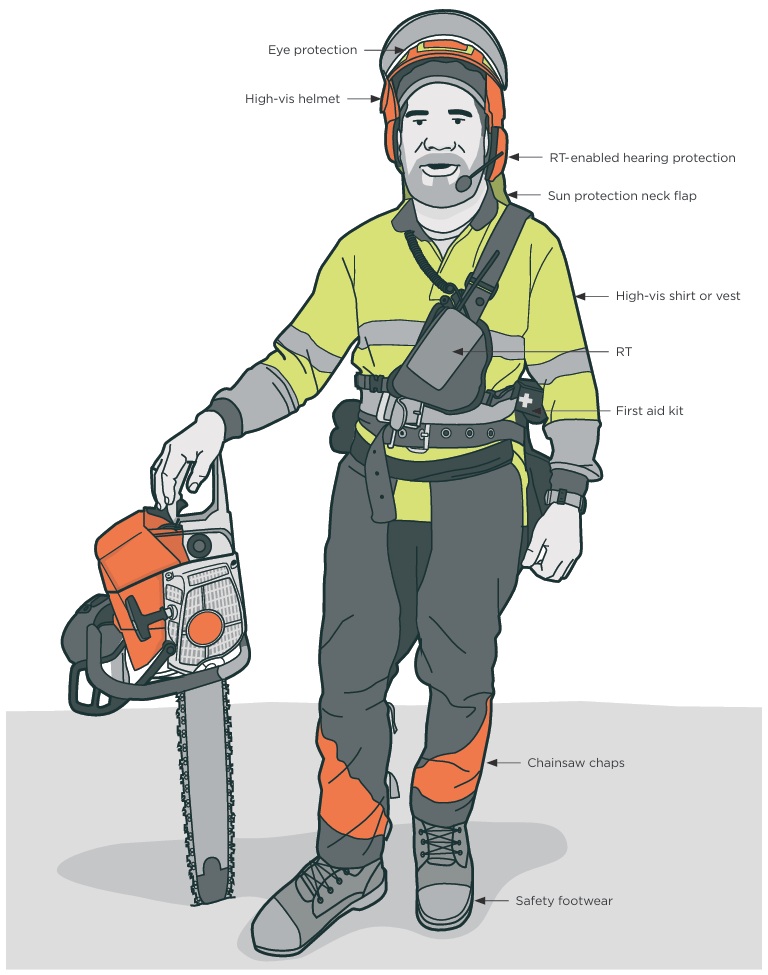
It is industry best practice for the following PPE to be used:
- high-vis shirt, vest or coat with day-night for added visibility
- high-vis helmet that meets recognised industry standards
- hearing protection with RT capability
- protective legwear, chainsaw chaps or trousers
- eye protection
- safety footwear that provides ankle support and good grip
- lone worker (man-down) device or digital radio equivalent.
21.4.2
Section 10 explains the requirements you must meet if you are using PPE to minimise risks.
21.4.3
Appendix 7 contains relevant standards for PPE. Look for the mark/stamp on the PPE to check it is compliant with the relevant standard.
21.4.4
Figure 20 shows the PPE fallers carry or are equipped with.
Equipment essentials
21.4.5
Make sure fallers have the right equipment for the job, including the minimum number of wedges to be carried (Figure 21).
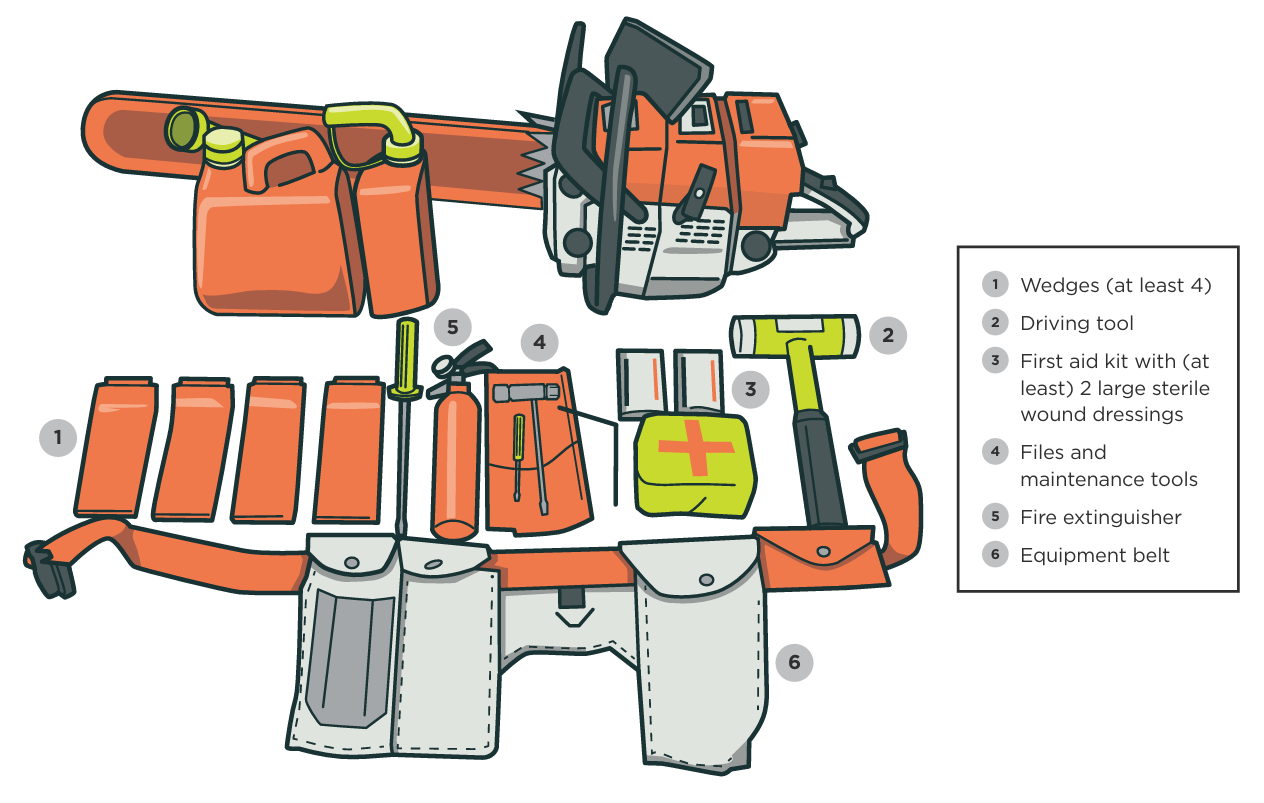
Figure 21 is adapted from Safe Work Australia’s guidance: Forestry: Guide to managing risks of timber harvesting operations (2014)(external link).
Chainsaws
21.4.6
Make sure chainsaws are in safe working order and include safety features such as:
- a safety mitt
- an inertia chain brake
- a chain catcher
- a rear handguard
- anti-vibration mounts
- a throttle lock-out
- an on-off switch
- a muffler and spark arrestor.
Communication
21.4.7
It is industry best practice that all fallers and any observers carry RT.
21.4.8
Have RT-enabled hearing protection or hearing protection that can fit earpieces for immediate and direct communication.
21.4.9
Make sure fallers and any observers check-in regularly (for example, every 30 minutes or after tank refuelling).
21.5 Observers
21.5.1
Observers work with the fallers to provide advice or decide when it is too risky to fell the tree. Particular attention should be given to windthrow or trees leaning into the hill.
21.5.2
Make sure observers are skilled in recognising and managing risk.
21.5.3
Make sure an observer is available on site and used when a faller is uncertain or in a higher risk situation.
21.5.4
Consider the use of observers when planning how the work is going to be carried out.
21.5.5
Make sure observers have an effective means of communicating with the faller. It is industry best practice to have a two-way RT with an earpiece in the earmuffs.
21.6 Seven key causes of harm
21.6.1
There are seven key causes of harm in manual tree felling that need to be planned for:
- fallers working too close to other people or plant
- incorrect or poor felling technique
- broken tree limbs or top hitting the faller
- hung-up trees left standing, or not felled using correct methods
- stem movement/rebound and butt swing
- felling dead trees or spars
- the faller being struck from behind by an object or tree.
21.6.2
The five-step tree felling plan is discussed next. Further guidance on managing the risks from the seven key causes of harm are discussed from Section 21.8 onwards.
21.7 The five-step tree felling plan
21.7.1
Make sure all fallers, and any observers, follow this five-step tree felling plan:
- Step 1: Site assessment
- Step 2: Individual tree assessment
- Step 3: Preparation of the work area and escape route
- Step 4: Fell the tree using safe felling techniques
- Step 5: Retreat and observe
21.7.2
These steps are explained below.
21.7.3
Before starting, make sure each faller is physically and mentally prepared for the task.
21.7.4
Step 1: Site assessment:
- Assess the stand for hazards relating to the trees, terrain, other operations, and power lines.
- Assess the strength and direction of the wind and whether it will affect safety.
21.7.5
Step 2: Individual tree assessment:
- Look for tree defects, decay, heavy lean, or any other characteristics of the tree that may affect the felling plan.
- Note the ground condition and soil moisture.
- Check the surrounding trees for interlocked branches, dead tops or branches that may fall into the work area.
- Determine if the tree can be safely felled and plan the felling cuts.
- Decide on the felling direction. This will help determine which side of the tree will be the safest for the escape route.
- Decide on retreat distance based on the assessment.
21.7.6
Step 3: Preparation of the work area and escape route:
- Clear vegetation and obstacles from around the base of the tree.
- Always think about the escape route before starting any felling cuts. Where possible, make sure the escape route is at a 45-degree angle opposite the felling direction (Figure 22).
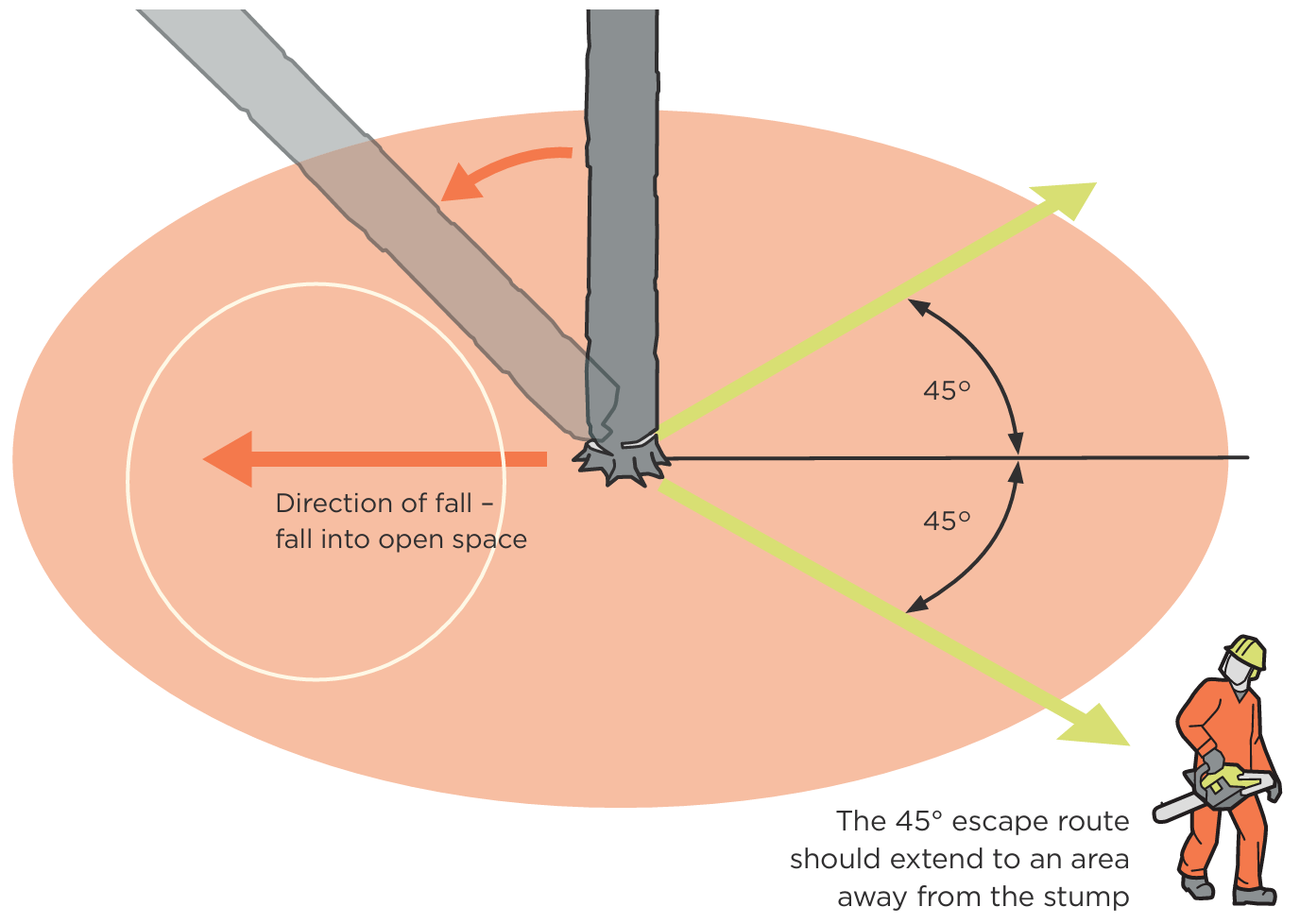
Figure 22 is adapted from Safe Work Australia’s guidance: Forestry: Guide to managing risks of timber harvesting operations (2014)(external link).
- Be sure the escape route is clear of obstacles or hazards before beginning.
21.7.7
Step 4: Fell the tree using safe felling techniques:
- Good felling technique is critical to safe, accurate, and consistent results.
- Fell trees over 200mm at the stump using a scarf and back cut.
- The degree of forward, back or side lean and the weight distribution will determine the type of back cut used and whether wedges, tree felling jacks or machine assistance will be required.
21.7.8
Step 5: Retreat and observe:
- Finish the felling cut on the safe side of the tree. Use the escape route as soon as the tree begins to fall.
- Watch for falling material and be far enough from the base of the tree to avoid a kick back, butt swing, or bounce.
- Avoid walking directly behind the tree.
21.7.9
Managing the risks from the seven key causes of harm are discussed next.
21.8 Managing the risks of fallers working too close to other people or plant
21.8.1
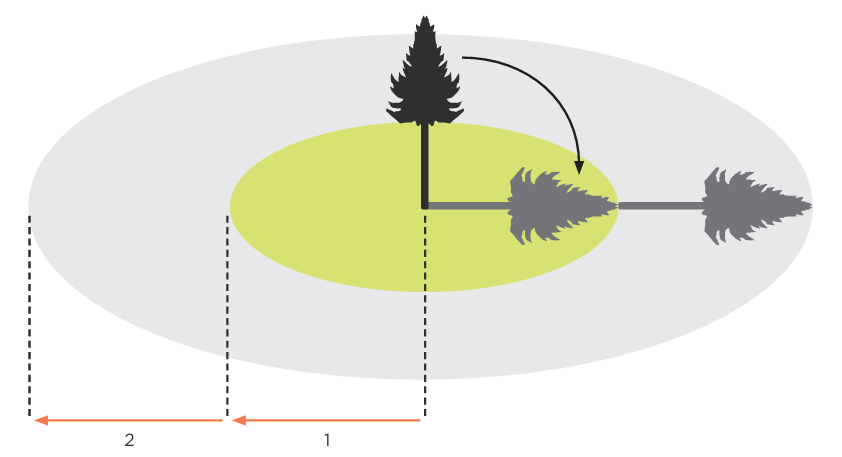
The danger zone of a felled tree is a circle from the stump that stretches out twice the height of the felled tree (Figure 23).
21.8.2
This danger zone allows for the chance that the falling tree may bring down another standing tree. If working on slopes, a greater distance may be required.
21.8.3
Make sure the only people present within those two tree-lengths are:
- the faller and any observer assisting the faller
- anybody being trained and the person supervising them
- an auditor or supervisor.
21.8.4
Anyone who is within two tree-lengths of a tree being felled is under the direct control of the faller. Make sure people within two tree-lengths of a tree being felled:
- can communicate with the faller, using clear, prearranged procedures, techniques, and signals using RT, earpiece, or other established method
- let the faller know when they are coming and when they arrive
- are positioned up the escape route in full view of the faller (Figure 22)
- can see the top of the tree being felled from a safe position.
21.8.5
For guidance on working near machines, see Section 20.
21.9 Managing the risks of broken limbs or tree top hitting the faller
21.9.1
Assessing a tree and its surroundings is the first step in felling. At this time the faller may be able to identify broken limbs or top.
21.9.2
If the limbs or top fall while the faller is working at the base, the danger zone is the width of the crown of the tree being felled.
21.9.3
If a felled tree falls into or brushes past another, the danger zone extends some distance behind the felled tree as the top or limb could rebound backwards. This means the recommended escape route (Figure 21) could be in the danger zone.
21.9.4
Use an observer if the faller cannot see the top of the tree.
21.9.5
If the faller is concerned about felling the tree safely, consider:
- using a felling assistant/observer
- using a machine to fell the tree or
- driving the tree (only where necessary).
21.10 Managing the risks of hung-up trees left standing, or not felled using correct methods
21.10.1
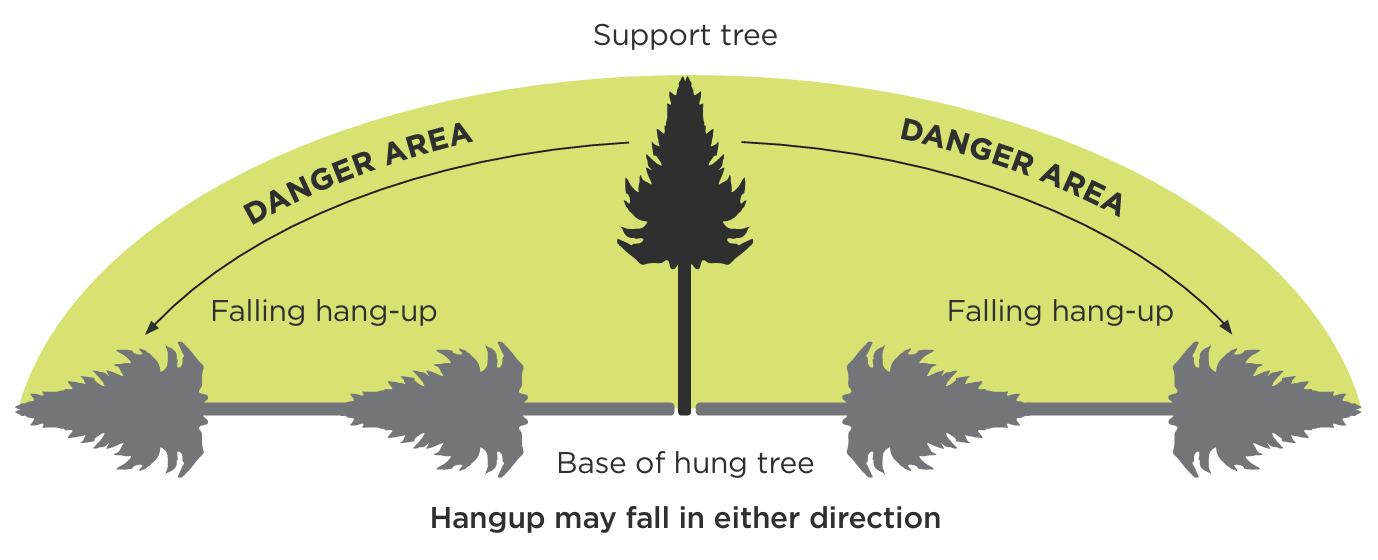
A hung-up tree is one that is caught up or lodged against another tree and is prevented from falling. This could be:
- a cut-up tree (where felling cuts have been made but the tree remains standing)
- a wind-affected/damaged tree
- a pushed tree.
21.10.2
Figure 24 shows the danger area when felling a hung-up tree.
21.10.3
Make sure all crew members are warned immediately if a faller creates or identifies a hang-up.
21.10.4
Make sure no one works or is within two tree-lengths of the likely direction of fall.
21.10.5
Then:
- do not allow work under a hang-up
- do not leave hung-up trees unattended
- bring down hung-up trees immediately or isolate the area from other activities and workers
- use a machine to pull down the hang-up if possible.
21.10.6
See Section 21.12 for guidance on using tree driving to bring down hang-ups.
21.11 Managing the risks from stem movement/rebound and butt swing
21.11.1
Stem movement back into the work area after felling can be caused by a number of factors. These include:
- uphill felling
- falling into standing trees
- the tree striking an obstacle as it falls (for example, a rock, another stem, other terrain features).
21.11.2
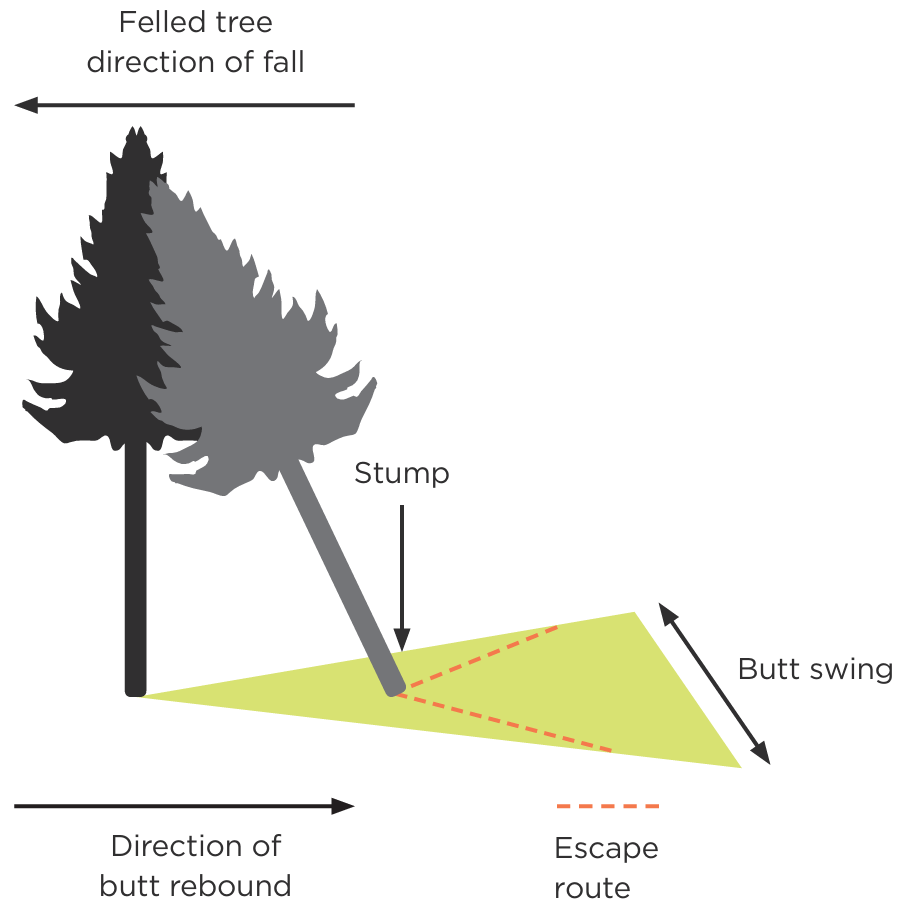
If a felled tree falls into or brushes against another, the butt of the tree can rebound and strike the faller. Spars are most likely to rebound.
21.11.3
A tree that is felled uphill may also slide back down the hill and strike the faller, so it is important to move further along your escape route.
21.11.4
Tree-to-tree contact can also snap off branches or tops of trees, which ricochet backwards.
21.11.5
Any of these situations may compromise the escape route. Where a hung-up tree kicks back off the stump, the danger zone extends back behind it (Figure 25).
21.11.6
To minimise the risk of stem rebound, make sure:
- there is an escape route cleared at a 45-degree angle opposite the felling direction where possible (Figure 22)
- the felling cut is finished on the safest side of the tree
- the faller (and observer if being used) keeps their eyes on the tree as it falls
- the faller moves away from the stump as the tree falls
- trees are not felled uphill where possible.
21.12 Managing the risks of tree driving
21.12.1
Tree driving is where a tree is pushed over by felling another tree onto it.
21.12.2
Tree driving may be used to fell trees:
- to manage risk (for example, remove overhead hazards)
- that are leaning against the intended direction of fall and cannot be safely felled using wedges
- that are hung-up, cut-up or broken
- where conventional felling methods have failed.
21.12.3
Make sure tree driving does not exceed one-onto-two trees.
21.12.4
Make sure tree fallers driving more than one-onto-one hold the appropriate unit standard for tree felling and have demonstrated competence.
Planning the drive
21.12.5
Make sure fallers call up the supervisor (or designated competent person) when a tree drive is to be attempted, and tell them if it is one-onto-one or one-onto-two.
21.12.6
Make sure an observer is called up if there is any doubt about the proposed drive to:
- provide a second opinion
- watch out for falling hazards that could be dislodged as the drive proceeds.
21.12.7
Plan the drive using the five-step felling plan with these additional points:
- the two tree-length zone applies to both the driving tree and the tree being driven
- both trees can sway forward and then back into the felling zone.
21.12.8
When the drive is successfully completed, make sure the supervisor/competent person is called to let them know of the completion.
21.12.9
For industry guidance, see Resources webpage
21.13 Managing the risks of felling dead trees
21.13.1
Dead trees (includes broken and rotted trees) are particularly hazardous. A dead tree can fall in any direction at any time without warning.
21.13.2
The danger zone associated with a dead tree consists of a circle with the centre at the base of the dead tree and with a radius of two tree-lengths. (Figure 23).
21.13.3
Identify dead trees before the faller begins working in the area, assess the risk they pose and manage appropriately:
- If dead trees are left standing, manage the risk from these to other work.
- If the dead tree is to be felled, consider the escape routes required and the risks of tree breakage and butt rebound.
21.13.4
Machine felling is the best way to fell a dead tree. Always consider this option first. If machine felling is not an option and manual felling is used, driving a dead tree may be the safest option for the faller.
21.13.5
Driving dead trees can also pose dangers as the dead tree may break, with the upper stem falling backwards towards the faller. Make sure the faller carries out a risk assessment appropriate to their situation. For more information, see 21.12 Managing the risks of tree driving.
21.13.6
Make sure the faller carries out their call-out procedure before and after felling the dead tree.
21.14 Managing the risks of windthrow or wind-damaged trees
21.14.1
Machine felling is the best way to fell a wind-damaged tree. Always consider this option first.
21.14.2
Make sure only workers with the appropriate windthrow skill/unit qualifications, experience and competence fell windthrow.
21.14.3
For industry guidance, see Resources webpage
21.15 Managing the risks of the faller being struck from behind by an object or tree
21.15.1
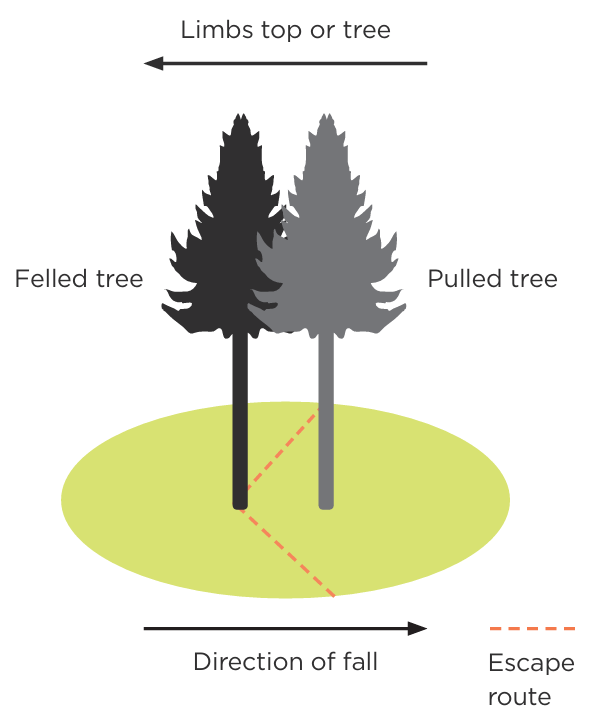
Sometimes a tree or limb can fall from a tree behind both the faller and the tree they are felling.
21.15.2
One cause can be intertwined branches or vines connecting the crowns of two trees. Occasionally the vibration from a large tree hitting the ground is enough to fell a dead or unstable tree.
21.15.3
When assessing trees to be felled include assessing the surrounding trees for damage and structural weakness. Look for branches interlocking with vines or branches of other trees.
21.15.4
The danger zone in this hazard extends from the felled tree to the tree behind with a width equal to the width of the tree behind (Figure 26). This hazard is relative to the direction of fall. This emphasises the importance of directional felling techniques and proper use of scarf and back cuts.
21.15.5
Make sure vegetation is cleared around the tree, and the escape route is clear.
21.16 Managing the risks of machine-assisted felling
21.16.1
Machine-assisted felling is used to manage the risks of manual felling. The two most common forms of machine-assisted felling are:
- using a machine to push the tree over
- using the winch on a machine to pull the tree over, or 'back-pulling'.
21.16.2
Whichever system is used, there are some basic principles that need to be followed.
- Make sure the machine is of sufficient size, capacity and traction that it can carry out the job.
- Make sure knuckle-boom loaders have a minimum weight of 20t.
- Make sure a wedge is inserted in the back-cut of any tree to be felled with machine assistance.
- Make sure the faller is in an agreed safe position before signalling for the machine to push or pull the tree over.
- Make sure the faller controls the operation.
Make sure the machine is suitable
21.16.3
A PCBU who manages or controls plant at a workplace must, so far as is reasonably practicable, ensure that the plant is without risks to the health and safety of any person.
21.16.4
Before committing to a machine-assisted felling plan, check that it is appropriate for the area to be felled. Some slopes are too steep for machine-assisted felling unless the machine is specifically designed for that terrain and anchored safely.
21.16.5
Other factors to consider in whether machine-assist is appropriate include:
- the size, lean and type of trees in the stand
- the environmental conditions
- the work method that best ensures the safety of the workers.
Make sure machines used to assist felling are:
- of adequate size and engine capacity
- appropriate to the terrain
- fitted with certified protective structures; OPS, ROPS, FOPS, COPS, and side-intrusion guarding.
Develop a risk management plan
21.16.7
Before starting machine-assisted felling, develop a risk management plan to manage the risks associated with this type of felling. Identify and assess the risks and put in place effective control measures to ensure the safety of all workers.
21.16.8
When developing the risk management plan, involve the crew manager, machine operators, and fallers. If the operation is close to roads or powerlines, also involve the powerline owners and road owners if required.
Clear and effective communication is essential. RT communication between faller and machine operator and the use of earpieces is strongly recommended. Do not use or rely on hand signals.
Do not conduct machine-assisted tree felling operations if the communication system is not effective.
21.16.9
In the risk management plan, include:
- plant management, including regular checking and maintenance by competent persons
- worker competency, including training and assessment
- the communication systems to be used
- standard operating procedures, including detailed descriptions of the machines and safe work methods used
- assessment of the area to be felled, including:
- ground debris and undergrowth around the tree
- escape routes that can be cleared by the grapple machine or blade
- removal of unstable branches and overhead hazards that can be reached with the grapple
- proximity to powerlines, roads, rail, and walking tracks
- slope and soil conditions, and how they affect the ability of the machine to move and apply force to the trees requiring machine assistance
- stand characteristics, including wind or snow damage, overhead hazards, vines, and undergrowth
- environmental conditions, including prevailing and expected weather such as wind and rain.
21.16.10
Document the risk management plan.
21.16.11
Review the risk management plan's effectiveness daily so long as machine-assisted tree felling is being used.
The faller and machine operator work together to safely fell trees
21.16.12
To plan the order trees will be machine-assist felled, make sure the machine operator and faller assess how each tree is going to be felled. This will minimise falling trees brushing standing trees in front of and to the side of them.
21.16.13
This means assessing each tree's characteristics, including:
- size
- lean
- double or multi leaders
- overhead hazards
- undergrowth.
21.16.14
Make sure the machine operator and faller discuss these factors and agree on:
- the appropriate felling method and direction
- how to position the machine
- the escape route to be used
- the length of the escape route required based on the characteristics of the tree
- how they will communicate.
21.16.15
While the felling approach for each tree is to be decided between the machine operator and the faller, make it clear:
- the faller controls the operation
- the machine operator is responsible for machine stability and control.
Machine assistance to push a tree over
21.16.16
This form of machine-assisted felling uses an excavator to control and push it in the desired direction.
21.16.17
Make sure the implement used to push the tree can stop the tree from sliding sideways.
21.16.18
The most common method of machine assisting is to hold the tree with a grapple.
21.16.19
Make sure the faller controls the operation. The machine operator is responsible for machine stability and control. The instruction to apply force to the tree can only come from the faller and when the faller is in a safe position.
21.16.20
The faller:
- checks that all equipment is fit for use, including personal protective equipment (PPE), first aid kit, chainsaw, wedges, and hammer
- uses the five-step tree felling procedure (see Section 21.7)
- retreats to a safe position clear of the tree while the grapple is being positioned
- completes the back cut
- directs where, when and how much force is applied to the tree
- retreats to the end of the escape route before signalling the machine operator to push the tree over
- directs the machine operator to apply force to fell the tree.
21.16.21
Once the scarf is cut, the faller can move between the tree and the machine to complete the back cutting.
21.16.22
Do not allow the faller to work directly under the raised boom. Back cut or cuts can be made from the side of the tree with the grapple positioned around the tree.
21.16.23
The machine operator:
- conducts prestart checks to ensure the machine is suitable and in a safe condition for use
- follows safe operating practices and procedures
- ensures the safety and stability of the machine
- discusses with the faller on the best machine position
- ensures there is no potential for the grapple to slip off the tree
- ensures effective communication is maintained
- ensures the faller is not positioned directly under the raised boom
- follows direction from the faller
- applies force to the tree only when directed by the faller.
21.16.24
For industry guidance, see Resources webpage
Machine assistance to pull trees over
21.16.25
A skidder, bulldozer or hauler with a winch can be used to back-pull trees. A line is attached to the tree being felled and cuts are placed in the tree by the faller.
21.16.26
The requirements for the machine are covered in Section 21.16.6. Make sure the machine also has a winch rope and a strop strong and long enough to pull the tree over safely.
21.16.27
Make sure the strop is attached as high as possible, which may require a ladder or climbing equipment.
21.16.28
To meet their duties under HSWA, PCBUs must, so far as is reasonably practicable, manage the risks of falling from any height. This applies to all work, including pruning from a ladder.
As well as these duties under HSWA, there are also specific requirements under regulations.
21.16.29
Where workers could fall more than 3m (measured from the person's feet above the ground), employers must, so far as is reasonably practicable, ensure that suitable means are provided to prevent them from falling.
These means could include a suitable fall restraint device or other suitable fall protection.
If this is not reasonably practicable, PCBUs will need to consider other ways to manage the risk.
21.16.30
Another person will be required to help getting the rope up the tree. This person can also act as an observer.
21.16.31
The faller controls the operation. The faller:
- checks that all required equipment is available and fit for use
- checks that the communications system with the machine operator is working
- selects a safe position and clears the escape route to the safe position
- positions the strop (or supervises the positioning of the strop)
- moves to the safe position and supervises the positioning of the machine
- instructs the operator to apply enough tension to pull the tree slightly forward
- moves from the safe position to put in the scarf and back-cut, and at least one wedge
- moves back to the safe position and instructs the machine operator to pull the tree over.
21.16.32
The machine operator:
- conducts prestart checks to ensure the machine is suitable and in a safe condition for use
- ensures the safety and stability of the machine
- discusses with the faller on the best machine position
- make sure effective communication is maintained
- follows direction from the faller
- applies force when directed by the faller.
21.16.33
For industry guidance, see Resources webpage
Last updated