7.1 Introduction to general workplace and facility requirements
7.1.1
Workplaces must meet certain requirements, including having certain facilities for workers.
7.1.2
This section provides guidance on the general workplace requirements and facilities PCBUs must provide so far as is reasonably practicable.
7.1.3
You must engage with your workers when proposing changes that may affect their health or safety, and when making decisions about the adequacy of facilities for the welfare of workers.
7.2 What are the general workplace requirements?
7.2.1
A 'workplace' is any place where:
- a worker goes or is likely to be while at work
- work is being carried out or is usually carried out.
7.2.2
This includes temporary or mobile workplaces, which are typical of forestry work.
7.2.3
In relation to workplaces there are certain requirements to meet. For example, you must ensure the following, so far as is reasonably practicable:
| Feature | Requirements |
|---|---|
| Layout | People must be able to enter, exit, and move about easily and safely, including in an emergency. |
| Work areas | Workers must have enough space to complete tasks safely. |
| Lighting | Lighting must be appropriate for the work being completed and sufficient to enable safe evacuation in an emergency. |
Table 11: Summary of general workplace requirements as applied to forestry
7.3 What facilities must be provided?
7.3.1
You must make sure adequate facilities are provided to workers, so far as is reasonably practicable, including:
- toilets
- hand-washing facilities
- clean drinking water
- eating and rest facilities
- first aid facilities (see Section 8 for further guidance).
7.3.2
Make sure workers can access these facilities freely and reasonably.
7.3.3
So far as is reasonably practicable, these facilities must be:
- sufficient in number
- maintained to be in good working order, and clean, safe and accessible.
7.3.4
To make sure the facilities are sufficient and meet the needs of your workforce, you must consider the:
- size, location, and nature of your workplace
- number of workers and composition of your workforce
- nature of the work being carried out and workplace hazards.
7.3.5
The principal and the contractor/sub-contractor have a duty to make sure adequate facilities are accessible for workers. In the planning stage of work, make arrangements for how these facilities will be provided, or made accessible. This is especially important when portable facilities may be required.
7.3.6
The following sections provide examples of ways these facilities can be made available to forestry workers.
7.4 Toilets and handwashing facilities
7.4.1
Workers must be provided clean toilet facilities and handwashing facilities so far as is reasonably practicable.
7.4.2
Examples of toilet facilities include:
- installing portable toilets
- transporting portable toilets on trailers
- toilets attached to containers
- camping toilets.
7.4.3
Make sure toilets are reasonably accessible, and in a safe place.
7.4.4
Portable toilets must be regularly cleaned.
7.4.5
Depending on the nature of the work and composition of your workforce you may need to have facilities for washing the body and sanitising facilities, along with bins for sanitary products.
7.5 Clean drinking water
7.5.1
Workers must be provided fresh clean drinking water so far as is reasonably practicable.
7.5.2
This may mean transporting bottled water in.
7.5.3
Access to drinking water is particularly important when working in the summer, or in hot environments.
7.6 Eating and break facilities
7.6.1
Workers must have facilities to eat and take breaks so far as is reasonably practicable.
7.6.2
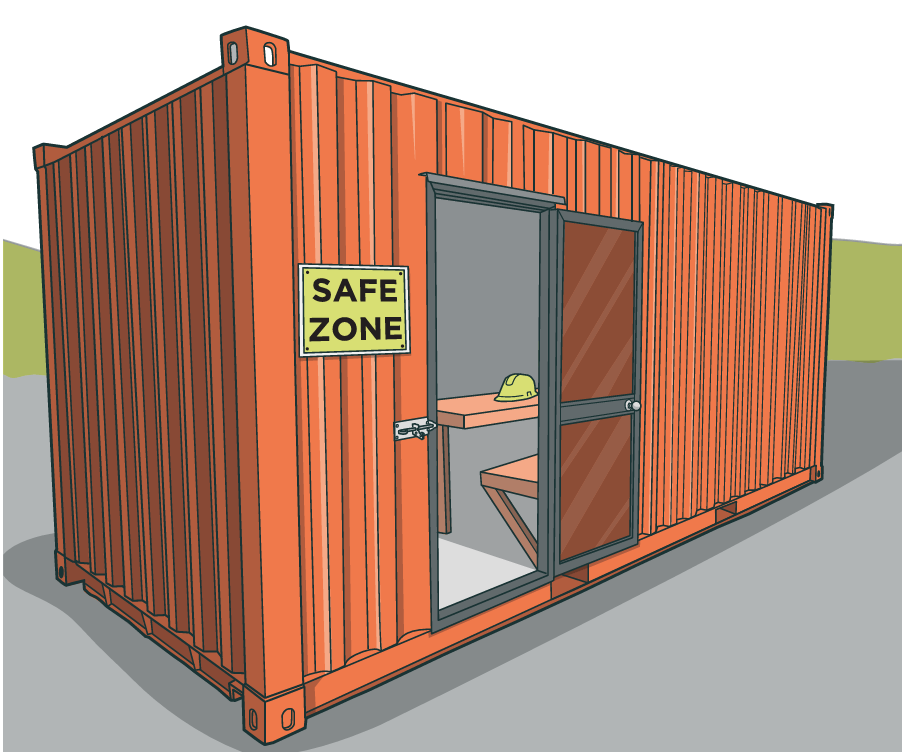
Provide workers a sheltered place to sit during break times.
7.6.3
Vehicle cabs can be used when there is no other reasonably practicable option, as long as the basic requirements for worker rest can be met.
Be respectful of other people's practices
Where possible, keep food preparation areas separated from personal hygiene areas. Encourage workers to understand the importance of keeping tapu or sacred things separate from things that are considered noa or common.
Other examples include:
- avoid sitting on tables
- avoid leaving hard hats on food tables
- avoid washing clothing and tea towels together.
Last updated