These guidelines provide owners of small forests with practical guidance on health and safety when managing a harvest.
Download:
Key points
- Plan your harvest well before you start it.
- Engage competent professionals.
- Work with other PCBUs to manage the risks.
- Monitor health and safety arrangements and improve them where possible.
Note to readers
Use of 'must' and 'should'
The words 'must' and 'should' indicate whether:
- an action is required by law, or
- is a recommended practice or approach.
| Term | Definition |
|---|---|
| Must | Legal requirement that you must comply with. |
| Should |
Recommended practice or approach. Where the word 'should' is used it means that it is a recommended practice or approach, but it is not mandatory. Alternative approaches may be adopted, including those which provide for equivalent or greater levels of safety. |
Key terms
A list of technical words, terms, and abbreviations used in these guidelines can be found in the glossary at the end of these guidelines. The glossary explains the meaning of each technical word, term, or abbreviation.
Lists
Lists of examples used in these guidelines are not complete lists. They may list some examples, but not all possible examples.
1.0 Introduction
These guidelines will help owners of small forests to understand their health and safety duties when planning and undertaking harvesting.
1.1 Purpose of this guide
This document will help owners of small forest (the ‘you’ in this document) plan a safe and healthy forest harvest.
It provides practical information on managing risks common to forest harvesting activities.
It explains how to work with other duty holders to ensure everyone meets their health and safety duties under the Health and Safety at Work Act 2015 (HSWA)
There is also comprehensive guidance on forestry and harvesting operations, and educational resources.
1.2 Who is this guide for?
Owners of small forests and farmers with woodlots/shelterbelts are the primary audience for these guidelines.
Other people who will find these guidelines useful are:
- landowners
- tree owners or absent owners
- woodlot managers
- forest contractors and workers
- tree buyers
- portable millers
- haulage contractors.
1.3 Why is the forest owner important?
Workers in forest operations are in a high-risk environment, that if not managed correctly, can result in deaths, serious injury or ill-health. Improving health and safety performance in forestry requires all those involved to do their bit.
Forest owners can influence the health and safety performance of other businesses working on the harvest. What this may look like will depend on whether you engage a forest manager, sell standing timber to a tree buyer (stumpage) or manage the harvest yourself.
Actions you could take are discussed in this guidance.
1.4 What is a PCBU?
Small forest owners and those who operate farms are usually persons conducting a business or undertaking (PCBUs) with duties under HSWA.
A PCBU must ensure, so far as is reasonably practicable, the health and safety of workers while at work (this includes workers who work for the PCBU and other workers who are influenced or directed by the PCBU), and that the health and safety of other persons is not put at risk by its work. This is called the ‘primary duty of care’.
For more information about PCBUs and ‘so far as is reasonably practicable’, see Appendices 3 and 4.
1.5 Duty holder roles
The following table provides general information about the different roles, tasks and likely duties under HSWA. The duties that a particular PCBU has will depend on the circumstances (for example, the degree of management or control). PCBUs may have more than one role
| Role | Tasks | Duties under HSWA |
|---|---|---|
| Owner of small forest/woodlot |
Decide how to manage the harvest. Select a competent forest manager (or perform the tasks and duties of the forest manager if managing the harvest themselves). Provide relevant information to the forest manager. Seek assurance from forest manager that health and safety standards are being maintained. |
Forest owners that are PCBUs have duties including:
|
|
Forest manager (can be an agent or a forestry contractor with forest management capabilities. Tree buyers perform forest manager tasks and duties |
Plan the forest and forest harvest. Select competent contractors. These may include silviculture, roading contractors and harvesting contractors. Monitor the health and safety performance of contractors. Act as main contact for PCBUs to consult, cooperate and coordinate. Communicate hazards and risks and control measures to all PCBUs. |
The forest manager or tree buyer's duties as a PCBU include:
|
| Roading contractor |
Work with forest manager, tree buyer or landowner (whichever is applicable) to finalise the plan for the roading and accessways. Carry out the roading work. Select competent subcontractors. Manage workers and subcontractors and ensure they work safely. Follow the roading plan and comply with the health and safety management system. Communicate risks and control measures to forest manager, tree buyer or landowner (whichever is applicable). Comply with agreed reporting requirements. |
The forest contractor's duties as a PCBU include:
|
| Forestry contractor |
Work with the forest manager or tree buyer to finalise the harvest plan. Select competent subcontractors. Manage forestry workers and subcontractors and ensure they work safely. Follow the harvest plan and comply with the health and safety management system. Communicate risks and control measures to forest manager/log buyer. Comply with agreed reporting requirements. |
The forest contractor's duties as a PCBU include:
|
| Haulage contractor |
Work with the forest manager or tree buyer to coordinate haulage activities. Carry out the haulage work. Communicate risks and control measures to forest manager or tree buyer. Comply with agreed reporting requirements. |
The haulage contractor duties as a PCBU include:
|
| Forestry/farm workers |
|
Workers have duties under HSWA. They must:
|
| Silviculture contractor |
Work with the forest manager to coordinate planting and silviculture activities. Carry out the silviculture work. Manage silviculture workers and subcontractors and ensure they work safely. Communicate risks and control measures to forest manager/log buyer. Comply with agreed reporting requirements. |
The silviculture contractor's duties as a PCBU include:
|
| Visitors and customers (other persons at the workplace) |
|
Visitors have duties under HSWA. They must:
|
Table 1: Duty holder roles
2.0 Managing risks
When PCBUs are working together on the same project or at the same location, each PCBU must do what they can, within their influence and control, to keep workers healthy and safe.
This section explains how to consult, coordinate and cooperate with other PCBUs.
2.1 What risks do you need to manage?
As a PCBU, you must ensure, so far as is reasonably practicable, the health and safety of workers who work for the PCBU (for example, your employees, contractors, including their sub-contractors or workers) while they are at work in the business or undertaking.
You must also ensure, so far as is reasonably practicable, that other people (for example, visitors and members of the public) are not put at risk by the work.
This is called the primary duty of care.
This is a broad duty; it includes but is not limited to, so far as is reasonably practicable:
- providing and maintaining a work environment that is without risks to health and safety
- providing and maintaining safe plant and structures
- providing and maintaining safe systems of work
- ensuring the safe use, handling and storage of plant, structures and substances
- providing adequate facilities for the welfare at work of workers in carrying out work for the business or undertaking, including ensuring access to those facilities
- providing any information, training, instruction or supervision that is necessary to protect all persons from risks to their health and safety arising from work carried out as part of the conduct of the business or undertaking
- monitoring the health of workers and the conditions at the workplace for the purpose of preventing injury or illness of workers arising from the conduct of the business or undertaking.
You must, so far as is reasonably practicable, maintain worker accommodation that you own or manage and provide because other accommodation is not reasonably available so that workers are not exposed to health and safety risks arising from the accommodation.
Managing risks means that:
- you must eliminate the risk to health and safety so far as is reasonably practicable
- if this is not reasonably practicable, you must minimise the risk so far as is reasonably practicable
- you must do what is within your influence and control to keep workers safe.
HSWA aims to improve health and safety at work by placing a clear duty on PCBUs to work together to manage shared risks and overlapping duties. This means you must work with other PCBUs involved in or affected by the harvest to manage risks collectively. You must do this by consulting, cooperating and coordinating activities with the other PCBUs.
Some PCBUs who you may need to work with to manage risks are:
- forestry contractor
- forest manager
- haulage contractor
- portable millers
- road maintenance, construction contractors, engineers
- farm manager (if they are a contractor, not an employee)
- other farm contractors such as fencing and shearing contractors
- Transpower or relevant distribution lines company.
What is meant by consultation, cooperation and coordination?
Consultation requires exchanging information with other PCBUs so everyone understands what the risks are and then collectively comes up with a plan to manage them.
Information to share and discuss includes:
- the harvest plan
- the activities of each PCBU
- the plant and equipment each will use
- the risks the work will create
- who has influence and control over the work and workplace
- which workers are involved in certain activities
- how will each PCBU consult with their workers
- which PCBU or PCBUs will be responsible for managing each risk.
Coordination is about putting the arrangements and agreements into place to manage health and safety, so that risks are managed by the PCBUs who are best placed to do so. Each PCBU must manage risks to the extent they have the ability to influence and control the matter to which the risks relate and do not do anything that compromises health and safety.
The PCBUs should:
- agree when and how control measures are implemented
- ensure the control measures work together and do not introduce new risks
- be open to communication with other PCBUs throughout the work.
Cooperation means discussing health and safety matters and complying with reasonable requests from other PCBUs so they can meet their duties.
The benefits of consulting, cooperating and coordinating
Working with other PCBUs to meet overlapping duties has many benefits:
- Each PCBU understands how the risks are being managed; this avoids a situation where a risk is not managed because one PCBU assumes it is being managed by another.
- The PCBUs can decide who is best placed to manage the risk.
- Duplication of effort is avoided.
What if one of the duty holders refuses to consult, cooperate or coordinate?
To avoid disagreements, make health and safety expectations clear when engaging contractors.
If there is a disagreement between you and another duty holder about the extent of consultation, cooperation and coordination needed, you do not need to accept poor health and safety performance.
Make sure that they are aware of the duty and outline what your expectations are.
Written agreements can be helpful to ensure everyone knows what is required. Including health and safety arrangements in contracts may give you a contractual right to enforce them.
3.0 Steps to planning a harvest
Depending on the size and location of the forest, organising a forest harvest can take several months or years. It is a good idea to start planning well before you want to harvest.
3.1 Decide how to manage the harvest
You need to decide who will manage the pre-harvest and harvesting work. You can engage an agent (forest manager), sell the standing timber to a tree buyer or manage the work yourself.
Engage a forest manager
Agents you could engage include:
- forest managers
- forestry consultants
- forest contractors (with small forest management capabilities).
Note: For simplicity these guidelines will use the term 'forest manager' to refer to the above agents.
A 'forest manager' plans and coordinates the harvesting activities. You may retain some influence and control in decision making, and as a PCBU will have responsibilities under HSWA.
If you choose to engage a forest manager, it is important to engage a reputable company with robust health and safety systems.
See Section 5 for more guidance on engaging forest managers.
Sell standing timber to a tree buyer
If you sell the standing crop to a tree buyer, they will plan and coordinate the harvesting activities. As a forest owner, you are still a PCBU and will have health and safety duties.
See Section 6 for more guidance on selling timber to tree buyers.
Manage the harvest yourself
If you chose to manage the harvest yourself, you should make sure you have a good understanding of health and safety management processes.
You will be responsible for engaging competent contractors, liaising with all of the contractors to make sure risks are managed appropriately, monitoring contractor performance, meeting other legislative requirements (for example, obtaining relevant consents) and planning the harvest.
See Section 7 for more guidance on managing the harvest yourself.
3.2 Engage competent professionals
Forest managers and other contractors are PCBUs that you are likely to share health and safety duties with.
It is important to engage competent PCBUs because you will likely have overlapping HSWA duties.
HSWA does not allow PCBUs to contract out of their duties or transfer them to another PCBU. This means that you are responsible for managing any risks within your influence and control even if another PCBU has a duty in relation to the same matter.
When you engage another PCBU, you need to be sure they have good health and safety systems in place so you can work together to manage shared risks.
If you engage a PCBU who has poor health and safety performance or refuses to work together to manage risks, it will be harder for you to meet your health and safety duties.
3.3 Identify physical constraints and hazards in the forest
You can use topographic maps and aerial photographs to identify the constraints and hazards associated with your forest. You should include this information in the harvest plan.
Examples of constraints and hazards:
- access points, tracks, roads and bridges (including if the right-of-way passes over neighbouring land or if the road/track/bridge services multiple properties)
- overhead power lines
- underground utilities
- areas of steep terrain, cliffs or quarries
- floodplains
- boundaries onto neighbouring properties
- structures such as fences and buildings
- rivers and creeks (consider downstream uses such as water supply)
- areas with poor ground conditions (erosion-prone, unstable or wet soil)
- areas for public access such as roads or walking and mountain biking tracks.
You or your forest manager should work with any contractors engaged to manage these constraints to ensure the work is done safely.
You must manage any health and safety risks 'so far as is reasonably practicable' to the extent you reasonably have the ability to influence and control them.
3.4 Identify seasonal constraints and hazards
Seasonal constraints and hazards can impact safety.
Bad weather which can cause delays
- It is not safe to do forestry work in high winds.
- Heavy rainfall can make conditions underfoot slippery and unsafe.
- Heavy rain can also cause washouts and slips on tracks and roads making them impassable. Repair and maintenance following water damage can be costly.
- Other bad weather conditions to consider are snow and black ice in the winter and lightning and drought conditions (fire risk) in the summer.
Farming activities such as lambing, harvesting and baling
- Overseeing a harvest at busy times in the farming calendar may not be practical.
- Farm workers should not work near the forest while harvesting is underway.
Visitors and recreational activities
- Some forest owners allow visitors to use their land for recreational activities such as tramping, mountain biking and hunting. You may choose to plan the harvest outside peak use times.
3.5 Liaise with neighbours
It is important to let neighbouring landowners know that you are planning to harvest your forest. If the work on your land creates health and safety risks for your neighbours, you must work with them to manage the risks.
You should consider contacting neighbours near the road to let them know that logging trucks and equipment will be using the road.
3.6 Check roads and bridges
Roads and bridges need to support fully loaded log trucks and trucks transporting mobile plant.
Make sure construction of harvest access roads and bridges meet the New Zealand Forest Road Engineering Manual 2020(external link)
A professional roading engineer can advise you on the suitability of roads and tracks.
3.7 Gather information for harvest plan
The harvest plan provides contractors with the information they need to assess the size of the job and negotiate a contract price.
You can engage a forest management company, a contractor or other experts to help you with this step.
Include information from the pre-harvest inventory and constraints assessments in the harvest plan. The harvest plan should include recent topographical maps of the site showing:
- location of the site-specific constraints and hazards
- access points and routes (including shared access ways)
- proposed road system
- location of skid site
- maximum and average haul distances (for log extraction)
- overhead power lines
- underground utilities
- areas of steep terrain, cliffs or quarries
- areas with windthrow
- boundaries onto neighbouring properties
- rivers and creeks – water management needs
- wāhi tapu and other areas of historical or cultural significance
- areas with poor ground conditions (erosion-prone, unstable or wet soil)
- tracks used by farm traffic
- areas of public access such as roads or walking and mountain biking tracks.
The harvest plan should also provide guidance on:
- the equipment contractors need to complete the work
- the tree extraction method:
- ground-based extraction uses bulldozers, wheeled skidders, tracked skidders, excavators, skidders and forwarders to gather the drag or load
- cable hauler extraction is used on steep slopes. The hauler remains in a fixed position and uses a raised steel rope to transport logs or stems
- reporting expectations
- electrical hazard management
- how the risks from any shared access ways will be managed.
3.8 Contracts
It is a good idea to have written contracts with your forest managers and other contractors.
A well written contract provides clarity and protects the interests of both parties. Including health and safety expectations in the contract means it is clear from the outset how health and safety will be managed.
It is advisable to include the harvest plan in the contract with the felling contactor.
Remember you cannot contract out of your health and safety duties.
4.0 Completing the harvest plan and risk management
This section discusses some of the risks that will need to be managed and that you should address when you consult, cooperate and coordinate with other PCBUs about the harvest.
4.1 Health risks
PCBUs must ensure, so far as is reasonably practicable, the health of their workers and other workers whose activities they influence or direct.
PCBUs must eliminate health risks so far as is reasonably practicable, and where this is not reasonably practicable, they must minimise them.
Identifying health risks
Work-related health risks in forest harvesting include:
- hearing damage from noise
- vibration damage from operating machinery
- heat stroke, sun stroke, sun burn or dehydration
- exposure to chemicals
- fatigue.
Managing health risks
PCBUs should ensure that any contractors they engage include health risks in their health and safety management systems.
PCBUs should have strong processes to identify, assess and manage existing and new health risks. They must first try to eliminate a risk before considering control measures to minimise the risk.
Each PCBU must manage risks to the extent they have the ability to influence and control the matter to which the risks relate. See Section 2.2 about working with other PCBUs to manage shared risks.
Monitoring health risks
PCBUs must ensure, so far as is reasonably practicable, the health and safety of workers, and that other people are not put at risk by your work. In some circumstances, this could mean monitoring worker exposure and/or the health of workers.
Exposure monitoring and health monitoring – along with verifying control measures are working effectively – can be used to manage health risks.
For information on forestry health risks and exposure monitoring and health monitoring, see the Approved Code of Practice for Safety and Health in Forest Operations.
4.2 Working around live power lines
If there are trees within two tree lengths of power lines you (or your forest manager), the lines owner and the contractor should consult and agree on the felling plan.
Notify the lines owner with plenty of time to allow the necessary safety measures to be taken. For example, specialist equipment may be required to direct trees away from a line and/or an outage of the line may also be required. This requires coordination with other parties and may not be able to be done at short notice.
Felling trees close to power lines is dangerous work and only competent people who have received specialised training should undertake this work.
Note: It is best practice to plant away from power lines so that a tree being felled, or one that falls during an adverse weather event, will not strike a power line.
4.3 Emergency management
PCBUs must ensure that an emergency plan is prepared for the workplace and then maintained and tested.
PCBUs must also ensure at the workplace, there is:
- adequate first aid equipment that workers can access
- access to first aid facilities and
- access to an adequate number of trained first aiders.
You must work with other PCBUs, so far as is reasonably practicable, to meet these duties.
Important information to discuss
The location of the forest
It is important that all workers can provide the emergency services with clear details about the location of the forest/woodlot/shelter belt. Ensure that workers know the:
- global positioning system (GPS) coordinates of the forest
- GPS coordinates of the nearest helicopter landing site
- location of access points from the main road
- details that could help the emergency services find the forest such as the names of roads, significant landmarks and buildings.
Communication plan for an emergency
It is important for everyone to know how to contact the emergency services. Remote or isolated workers must have an effective system of communication.
4.4 Management of site access
Felling, hauling and loading logs is dangerous work, therefore it is important to carefully manage site access during the harvest.
You and any contractors need to ensure so far as is reasonably practicable that unauthorised people do not enter the forest as they could be hurt. Where possible limit access to the forest to the forestry crew and haulage truck drivers.
4.5 Risks to farm workers
If your forest is a woodlot on a working farm you must, so far as is reasonably practicable, make sure:
- your farm workers are not put at risk by the harvesting activities and
- forestry workers are not put at risk by farming operations.
Communicate the risks associated with the harvest to your workers and put control measures in place to manage the risks.
Examples of control measures include:
- arranging work so workers do not need to go near the area
- moving stock from paddocks near the forest/woodlot or planning your work so stock movements do not coincide with logging truck movements
- using radios (if you have them) to communicate with other traffic
- putting procedures in place to manage how farm vehicles and forestry vehicles/haulage will share farm roads and tracks.
4.6 Traffic management and site access
You will have identified roads as a constraint on the harvest plan. During harvesting operations, there may be increased traffic such as haulage trucks, workers' vehicles/transport and other contractors using roads and tracks on your property. There may also be felling taking place next to roads and tracks. You and any contractors need to put a plan in place to ensure the safety of road users is not put at risk.
Private roads
The felling contractor may organise traffic management for you. Discuss and agree traffic management with the forest manager or contractor to ensure you understand the processes that are in place. Communicate this to workers and visitors.
Some examples of how traffic can be managed include:
- using signs to warn drivers that they are approaching logging operations
- using signs to tell the driver to stop and contact a supervisor for authorisation to continue
- using an RT channel for drivers using the road to contact.
Unmanned road closures
Banners can be used at unmanned road closures to prevent drivers from missing or driving around signs. Note: If a road is an emergency access route, the banners must be easy to take down.
For more information see the Best Practice Guidelines for Temporary Traffic Control
Public roads
Traffic management for public roads should also be discussed with your forest manager/contractor. If trees are being felled within two tree lengths of a public road, put traffic management including signs in place.
Traffic management needs to comply with the requirements of the appropriate road control authority (RCA). The contractor will need to apply for formal authorisation from the RCA before work starts.
4.7 Visitors/members of the public
If you allow members of the public on to your land (for example to hunt, fish and mountain bike, or if there is a right of way across your land) you must make sure the harvesting does not put people at risk.
Some control measures you could put in place include:
- putting up signs to warn people that felling is underway and access is prohibited
- notifying the local hunting, tramping and fishing clubs that felling is underway and the access is prohibited.
4.8 Bad weather
Bad weather such as heavy rain, snow and high winds make manual tree felling substantially less safe.
In the case of bad weather, you and any contractors may need to agree a new time frame for completion of the work. Requiring workers to work long shifts because of delays can cause them to become fatigued. Fatigue can be a contributing factor to health and safety incidents.
4.9 Notifying WorkSafe
Notifiable work
Felling trees for commercial gain is notifiable work. You must agree who (you, forest manager or contractor) will notify WorkSafe at least 24 hours before felling begins.
Notify WorkSafe about notifiable work
Notifiable events
A PCBU must notify WorkSafe as soon as possible after a notifiable injury, illness, incident or the death of a person. Where more than one PCBU is involved, they should agree who will notify WorkSafe.
The PCBU who manages or controls the workplace where the notifiable event occurred must preserve the site until advised otherwise by a WorkSafe inspector (there are some exceptions to this, including to help an injured person or to make the site safe).
In the case of emergency, phone 111.
To notify WorkSafe:
- If someone has been killed as a result of work, notify us immediately by phone: 0800 030 040 (24/7).
- For all other notifications, go to Notify WorkSafe
4.10 Documents to have on-site
Contractors should ensure they have certain documents on-site including the following:
- pre-harvest agreement
- a topographical map showing high-risk areas and known infrastructure hazards
- information on mean tree height
- maximum log storage
- chain shot management (where applicable)
- the traffic management plan
- tree felling plan
- tree/log extraction plan
- tree processing and log loading plan.
You may want to ask the contractor or forest manager for a copy of this documentation for your own risk management plans.
4.11 Reports and updates
Agree with your forest manager or contractor what updates and reports they will provide you with, and the frequency of reporting.
Ensure that you have arrangements to communicate and collaboratively manage new risks and hazards as they arise.
5.0 If you engage a forest manager
5.1 What can a forest manager do?
A good forest manager can provide expert advice on many aspects of health, safety and quality management, including:
- pre–harvest assessment
- road and track access needs
- hiring a logging contractor (crew) with the right equipment
- transport and logging trucks
- assessment of logs and matching logs to suitable markets
- safety considerations and complying with your HSWA duties
- obtaining relevant consents.
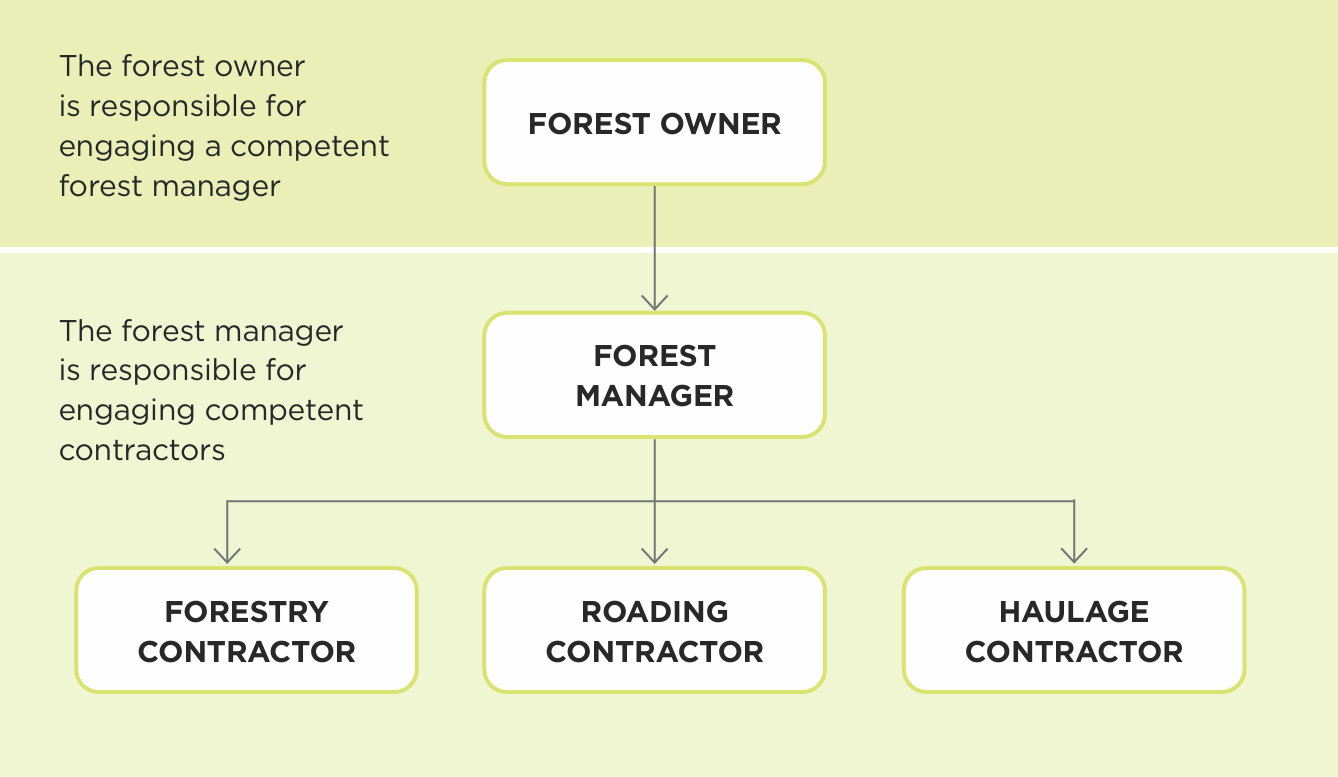
Figure 1 is a hierarchical flowchart illustrating a contracting chain and responsibility structure.
Top level: forest owner. The forest owner is responsible for engaging a competent forest manager.
Middle level: forest manager. The forest manager is responsible for engaging competent contractors.
Bottom level: forestry contractor, roading contractor, and haulage contractor.
5.2 When should you engage a forest manager?
Engaging a forest manager is likely to be the best option for absentee forest owners and others who do not have experience of forest operations.
Engaging a forest manager can also be worthwhile for farmers. A good forest manager will help you engage the right people, with the right skills, equipment and safety experience for the job. Since forest managers are familiar with forestry operations they can undertake a more thorough assessment of a contractor's health, safety, environment and quality systems.
A forest manager will act as a key contact for all the PCBUs and workers involved in the work. They can help ensure that all PCBUs are consulting, coordinating and cooperating to assist you and them in meeting health and safety duties.
Questions to ask your forest manager
- Are you experienced at managing this type of project? What are some examples of similar projects you have managed?
- What are the main health and safety risks associated with forestry operations? How do you assess and manage these?
- How do you ensure the contractors you engage are competent and safe?
- Do the contractors you engage use the highest control measures that are reasonably practicable? Do they use mechanised plant to manage risks arising from tree felling, tree extraction and tree processing?
- If they do use manual felling, how do they manage the risks?
- How will you monitor health and safety, environmental and quality performance of contractors? How will you report on this?
- How will you communicate risks and work with all the relevant people to effectively manage them?
- How do you consult, coordinate and cooperate with other PCBUs?
- Will you ensure that contractors have enough time and resource to complete the work safely and without their workers becoming fatigued?
- Who will take responsibility in the event of a notifiable event Who will ensure the scene is preserved? Who will notify WorkSafe?
5.3 Monitor health and safety
Monitoring health and safety arrangements is an important step in risk management.
If you have engaged a forest manager, they will be responsible for monitoring how each contractor performs. However, you should follow up with the manager to ensure all contractors are maintaining safe standards.
You should ask for results from safety audits. If the audits show any contractor has not been conforming to the agreed health and safety plans, you should ensure the forest manager takes steps to address these non-conformances.
For longer jobs, you may wish to engage an independent consultant to audit safety performance.
Review and feedback
It is a good idea to meet with your forest manager once the work is completed to discuss the quality of the work and the health and safety performance of the businesses involved.
This gives you the opportunity to provide feedback on how they can improve their health and safety. You can also think about and take note of what you would do differently if you harvest another forest in the future.
6.0 If you sell standing timber
6.1 Discuss health and safety expectations with tree buyer
If you decide to sell your standing timber, the tree buyer will arrange the forest harvesting activities agreed in the contract of sale.
The cost of harvesting is factored into the sale price. If you sell your standing timber, you will still have duties as a PCBU under HSWA. You cannot contract out of your duties.
Before you finalise the sale, make sure you discuss health and safety expectations with the tree buyer.
You will need to consider whether you have overlapping duties with the contractors that the tree buyer arranges to harvest the forest and if so, you must consult, cooperate and coordinate with them.
Questions to ask a tree buyer
- What health and safety provisions will be included in the contract?
- How do you ensure the contractors you engage are competent and safe?
- How will you monitor the health and safety performance of contractors? Will you or the contractor keep me informed of any non-conformances?
- How will you or your contractor communicate risks and work with all the relevant people to effectively manage them?
- How do you consult, coordinate and cooperate with other PCBUs? How will you ensure that contractors have enough time and resource to complete the work safely and without workers becoming fatigued?
6.2 Monitor health and safety
Monitoring health and safety arrangements is an important step in risk management. You should check the tree buyer and contractors are following the agreed arrangements.
Monitoring tree buyer and contractor performance
It is important to monitor performance to ensure that the tree buyer and contractors are completing the work as agreed. Monitoring does not mean that you have to be at the forest every day checking on what the contractors are doing.
What is reasonable will depend on the circumstances, such as the duration of the work and your access to the site. You may monitor performance by visiting the site, making a phone call to get an update or receiving an email report.
Things to check and discuss with the tree buyer
- Is there a health and safety management system in place? How are you ensuring everyone is following the requirements?
- Are there any new risks we need to discuss?
- Have visitors to the site been inducted?
- How are high-risk activities being managed?
- How are you engaging with your workers on health and safety?
- Have there been any health and safety incidents? What preventative measures have been put in place? Did you notify WorkSafe?
- How will worker health be managed to prevent harm from work-related health hazards and risks?
- How will exposure to work-related health hazards and risks be monitored?
- Is our agreed traffic management plan working? Do we need to make any changes?
- Is our plan to control site access working? Do we need to make any changes?
- How are you monitoring sub-contractors?
- How are you preventing fatigue?
If a tree buyer or contractor is not following the agreed health and safety arrangements, you should raise this with them straight away and come to an agreement about how to improve performance.
7.0 Managing the harvest yourself
7.1 Engaging contractors
If you decide to manage the harvest yourself, you will probably need to engage several different contractors (felling, haulage, road maintenance). When you engage any contractor, you will have overlapping health and safety duties, so it is important to find competent contractors.
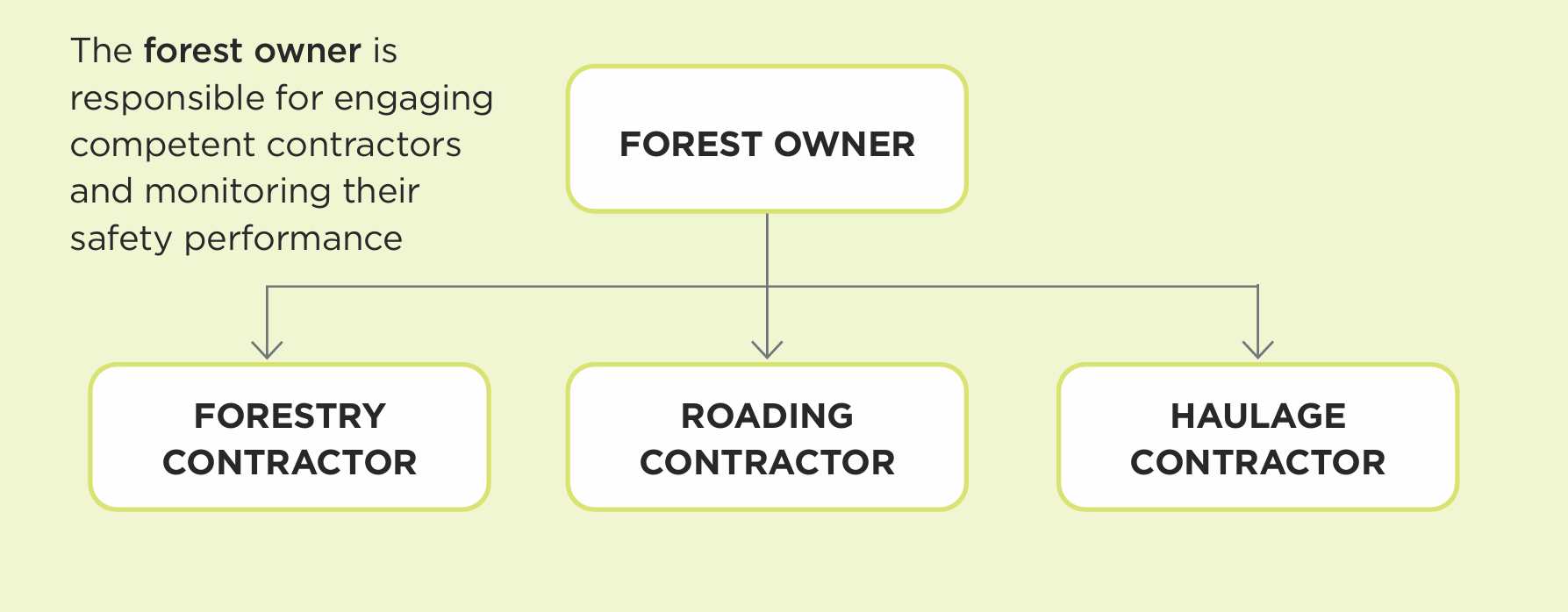
Figure 2 is a hierarchical diagram showing the forest owner at the top. The forest owner is responsible for engaging competent contractors and monitoring their safety performance. An arrow points down and splits into three branches, which end in: forestry contractor, roading contractor, and haulage contractor.
End of text alternative.
As a PCBU, you also owe health and safety duties to workers (which includes contractors and subcontractors).
There are several ways of finding a contractor:
- Put the contract out for tender by advertising online or in forestry publications.
- Use a contractor selected by your forest manager.
- Use a local contractor recommended by contacts or friends.
- Contact the Forestry Industry Contractors Association (FICA).
Whichever method you use, you should check each contractor is competent and has systems in place to complete the work they are engaged to do without an adverse impact on health and safety. This does not mean that you have to become an expert in forestry health and safety. It does mean that you should discuss health and safety with each contractor before you hire them.
You should check that they have an effective health and safety management system.
Talking to your contractor about health and safety
- Are you aware of WorkSafe's guidance? Do your work practices meet the standard in this guidance?
- Do you have a health and safety management system? Have you had it audited?
- Do you have mechanised plant to undertake tree felling, tree extraction and tree processing?
- What equipment will you need to do the harvest? How do you ensure it is well maintained and kept in a safe condition to use?
- What mobile plant will you use? How do you ensure it is safe? What might be the impacts on the land from using the mobile plant?
- How do you make sure your workers are competent for the tasks they will undertake? What training and qualifications do they have?
- Will you use subcontractors? How do you ensure they are competent?
- What type of personal protective equipment do you supply your workers with?
- Can you provide details of similar work you have done in the past?
- Do you notify WorkSafe before you start harvesting?
- How do you engage with your workers on health and safety matters?
- Have you been prosecuted or investigated by WorkSafe? How have you improved health and safety following this?
- How do you manage worker fatigue?
- What activities do you undertake to protect your workers' health?
- Do you have an alcohol and drug policy? How do you manage and enforce this?
- How will you meet your duty to consult, coordinate and cooperate with other PCBUs?
- How do you ensure your workers are working safely and meeting competency requirements?
- Are you a member of any industry associations? Which ones?
- Do you have industry certification (such as Safetree certification)?
If you have concerns about health and safety, discuss these with the relevant contractor and ask for more information if you are not sure about something.
Health and safety plan
You should ask potential contractors to outline how they will identify, assess and manage the risks and hazards identified in the harvest plan.
References
Ask for references from past customers to ensure any contractor has good hiring and work practices.
7.2 Monitoring health and safety
Monitoring health and safety arrangements is an important step in risk management. You should check that your contractors and your own workers are following the agreed arrangements.
Monitoring contractor performance
It is important to monitor each contractor's performance to ensure that they are completing the work as agreed in the harvest plan. Monitoring a contractor does not mean that you have to be at the forest every day checking on what the contractor is doing.
What is reasonable will depend on the circumstances, such as the duration of the work and your access to the site. You may monitor performance by visiting the site, making a phone call to get an update, or receiving an email report.
Things to check and discuss with the contractor
- Is there a health and safety management system in place? How are you ensuring everyone is following the requirements?
- Are there any new risks we need to discuss?
- Have visitors to the site been inducted?
- How are high-risk activities being managed?
- How are you engaging with your workers on health and safety?
- Have there been any health and safety incidents? What preventative measures have been put in place? Did you notify WorkSafe?
- How will worker health be managed to prevent harm from work-related health hazards and risks?
- How will exposure to work-related health hazards and risks be monitored?
- Is our agreed traffic management plan working? Do we need to make any changes?
- Is our plan to control site access working? Do we need to make any changes?
- How are you monitoring sub-contractors?
- How are you preventing fatigue?
If a contractor is not following the agreed health and safety arrangements, you should raise this with them straight away and come to an agreement about how to improve performance.
Visiting the forest during the harvest
Like any other visitor to the site, you should advise any contractors involved when you are coming and follow the site visitor procedures.
When you arrive at the site the relevant contractor will induct you by advising you of the site hazards such as:
- overhead risks
- noise
- slips, trips and falls
- emergency procedures
- machinery risks
- other site-specific risks.
The contractor should make sure that someone accompanies you around the site and that you have the right personal protective equipment (PPE).
PPE for a site visit includes:
- high visibility clothing
- lace-up safety boots
- hard hat
- hearing protection.
Review and feedback
It is a good idea to meet with your contractors once the work is completed to discuss the quality of the work and the health and safety performance of the businesses involved.
This gives you the opportunity to provide feedback on how they can improve their health and safety.
You can also think about and take note of what you would do differently if you harvest another forest in the future.
7.3 Working in your own forest
Depending on the size of your forest, you may decide to do some or all of the forestry work yourself. It is important to remember that forestry work is dangerous, and you need a high-level of skill and competence to produce quality logs safely.
Only competent fallers and machine operators should attempt tree felling and log extraction. Make sure you have the right skills and training.
Forest harvesting involves high risk work activities such as tree felling, breaking out, cutting trees into logs and operating mobile plant. Any person engaging in this work must be adequately trained and competent or under direct supervision.
This means that if you and your workers are undertaking forestry work you should have formal training and be deemed competent by an independent third party. As well as complying with your obligations under HSWA, you should have knowledge of WorkSafe guidance.
If you and your workers are doing harvesting work yourself, you should have a comprehensive health and safety system in place including but not limited to:
- a health and safety policy
- a drug and alcohol policy, including appropriate testing
- training and supervision
- health and safety meetings
- hazard management and risk assessment
- auditing and inspection programmes
- incident reporting and investigations
- emergency procedures
- hazardous substances management
- monitoring worker health
- monitoring environmental conditions.
Using chainsaws
Chainsaws are often used for forestry work such as land preparation, thinning, pruning and felling. If you plan on doing this type of work yourself, you must be adequately trained and competent or under direct supervision.
Hazardous felling includes:
- wind-thrown or wind-affected trees
- large shelter belt trees
- trees with a heavy lean or unbalanced branches
- trees near buildings, roads or public access ways
- trees on steep slopes or unstable ground
- trees near power lines.
Appendices
Appendix 1: More information
Safetree(external link) (about injury prevention for New Zealand’s forestry sector)
Forest Owners Association (external link)
Forestry Industry Safety Council (external link)
New Zealand Farm Forestry Association (external link)
Appendix 2: Glossary
This section explains some of the terminology used in this guide.
| Term | Explanation |
|---|---|
| Chain shot | The high-speed ejection of a piece of chain when a chain used in mechanised harvesting breaks. |
| Forestry contractor | A PCBU that has been engaged to undertake the forest harvest. |
| Manual tree felling | A person felling a tree with a chainsaw. |
| Maximum log storage | The maximum number of logs that can be safely staked in the designated log staking area. |
| Road Control Authority | A body or person having control of the road; and includes a person acting under and within the terms of a delegation or authorisation given by the controlling authority. |
| Wāhi tapu | A place sacred to Māori in a traditional, spiritual, religious, ritual or mythological sense. |
| Underground utilities | Telecommunication, electricity, natural gas, fibre optics lines, storm drains, water mains and wastewater pipes. |
| Windthrow | Trees that have been blown down (stems snapped or uprooted). |
Appendix 3: Health and Safety at Work Act 2015 duties
The Health and Safety at Work Act 2015(external link) (HSWA) is New Zealand's key work health and safety law.
All work and workplaces are covered by HSWA unless they have been specifically excluded. For example, HSWA does not apply to the armed forces in certain situations.
HSWA sets out the work health and safety duties that duty holders must comply with.
There are four types of duty holder under HSWA:
- a person conducting a business or understanding (PCBU)
- an officer
- a worker
- an 'other person' at the workplace.
Most duties under HSWA relate to how work is carried out. However, some duties are linked to where work is carried out: the workplace.
A workplace is a place where work is being carried out or usually carried out for a business or undertaking. It includes any place where a worker goes or is likely to be while at work section 20 of HSWA(external link)
DUTY HOLDER: PCBU
Who they are?
A person conducting a business or undertaking (PCBU) may be an individual person or an organisation.
The following are not PCBUs:
- officers
- workers
- other persons at a workplace
- volunteer associations that do not have employees
- home occupiers (such as home owners or tenants) who pay someone to do work around the home section 17 of HSWA(external link)
Examples
- a business
- a self-employed person
- partners in a partnership
- a government agency
- a local council
- a school or university.
What are their duties?
A PCBU has many duties. Key duties are summarised below.
Primary duty of care – section 36 of HSWA(external link)
A PCBU must ensure, so far as is reasonably practicable, the health and safety of workers, and that other persons are not put at risk by its work.
For more information see:
- Introduction to the Health and Safety at Work Act 2015
- Appendix 4 of this guidance for an explanation of ‘so far as is reasonably practicable’.
Managing risks – section 30 of HSWA(external link)
Risks to health and safety arise from people being exposed to hazards (anything that can cause harm). A PCBU must manage work health and safety risks.
- A PCBU must first try to eliminate a risk so far as is reasonably practicable. This can be done by removing the source of harm
- for example, removing faulty equipment or a trip hazard.
- If it is not reasonably practicable to eliminate the risk, it must be minimised so far as is reasonably practicable.
For more information see:
- Identifying, assessing and managing work risks [PDF, 404 KB]
- Section 5 of this guidance.
Overlapping duties: working with other PCBUs – section 34 of HSWA(external link)
A PCBU with overlapping duties must, so far as is reasonably practicable, consult, cooperate and coordinate activities with other PCBUs they share duties with.
For more information see Appendix 5 of this guidance.
Involving workers: worker engagement, participation and representation – Part 3 of HSWA(external link)
A PCBU must, so far as is reasonably practicable, engage with their workers (or their workers’ representatives) about health and safety matters that will directly affect the workers.
A PCBU must have worker participation practices that give their workers reasonable opportunities to participate in improving health and safety on an ongoing basis.
For more information see Appendix 6 of this guidance.
DUTY HOLDER: Upstream PCBU
Who they are?
A PCBU in the supply chain.
Examples
- a designer
- a manufacturer
- a supplier
- an importer
- an installer, constructor or commissioner.
What are their duties?
Upstream PCBU – sections 39–43 of HSWA(external link)
An upstream PCBU must ensure, so far as is reasonably practicable, that the work they do or the things they provide to other workplaces do not create health and safety risks.
For more information see Introduction to the Health and Safety at Work Act 2015
DUTY HOLDER: Officer
Who they are?
A specified person or a person who exercises significant influence over the management of the business or undertaking section 18 of HSWA(external link)
Examples
- a company director
- a partner or general partner
- a chief executive.
What are their duties?
Officer – section 44 of HSWA(external link)
An officer must exercise due diligence that includes taking reasonable steps to ensure that the PCBU meets their health and safety duties.
For more information see Introduction to the Health and Safety at Work Act 2015
DUTY HOLDER: Worker
Who they are?
An individual who carries out work for a PCBU section 19 of HSWA(external link)
Examples
- an employee
- a contractor or sub-contractor
- an employee of a contractor or sub-contractor
- an employee of a labour hire company
- an outworker (including homeworker)
- an apprentice or trainee
- a person gaining work experience or on work trials
- a volunteer worker.
What are their duties?
Worker – section 45 of HSWA(external link)
A worker must take reasonable care of their own health and safety, and take reasonable care that they do not harm others at work.
A worker must cooperate with reasonable policies and procedures the PCBU has in place that the worker has been told about.
A worker must comply, as far as they are reasonably able, with any reasonable instruction given by the PCBU so the PCBU can meet their legal duties.
For more information see Introduction to the Health and Safety at Work Act 2015
DUTY HOLDER: Other person at the workplace
Who they are?
An individual present at a workplace (not a worker).
Examples
- a workplace visitor
- a casual volunteer (not a volunteer worker)
- a customer.
What are their duties?
Other person at the workplace – section 46 of HSWA(external link)
An ‘other person’ has a duty to take reasonable care of their own health and safety, and not adversely affect the health and safety of anyone else.
They must comply with reasonable instructions relating to health and safety at the workplace.
For more information see: Introduction to the Health and Safety at Work Act 2015
Appendix 4: So far as is reasonably practicable (section 22 of HSWA)
section 22 of HSWA(external link)
Certain PCBU duties (the section 36–43(external link) duties including the primary duty of care) must be carried out ‘so far as is reasonably practicable’.
What to consider when deciding what is ‘reasonably practicable’
Just because something is possible to do, does not mean it is reasonably practicable in the circumstances.
Consider:
- What possible actions can be taken to ensure health and safety?
- Of these possible actions, at a particular time, what is reasonable to do?
Think about the following questions.
What is known about the risk?
- How likely is the risk to occur?
- How severe is the illness or injury that might occur if something goes wrong?
- What is known, or should reasonably be known, about the risk?
What is known about possible control measures?
- What is known, or should reasonably be known, about the ways (control measures) to eliminate or minimise the risk?
- What control measures are available?
- How appropriate (suitable) are the control measures to manage the risk?
- What are the costs of these control measures?
- Are the costs grossly disproportionate to the risk? Cost must only be used as a reason to not do something when that cost is grossly out of proportion to the risk.
While PCBUs should check if there are widely used control measures for that risk (such as industry standards), they should always keep their specific circumstances in mind. A common industry practice might not be the most effective or appropriate control measure to use.
If PCBUs are not sure what control measures are appropriate, WorkSafe recommends getting advice from a suitably qualified and experienced health and safety professional.
For more information, see our guidance: Reasonably practicable [PDF, 44 KB]
Appendix 5: Working with other PCBUs – overlapping duties (section 34 of HSWA)
section 34 of HSWA(external link)
More than one PCBU can have a duty in relation to the same matter. These PCBUs have overlapping duties – this means that the duties are shared between them.
![[Image] illustration of two overlapping PCBU circles with overlapping duties in the center](/assets/Topic/Construction/Roadside-GPG/image-roadside-gpg-appendix-4.jpg)
Duties regularly overlap:
- in a shared workplace (for example, a building site or a port) where more than one business has control and influence over the work on site.
- in a contracting chain, where contractors and subcontractors provide services to a head contractor or client and do not necessarily share the same workplace.
A PCBU must, so far as is reasonably practicable, consult, cooperate and coordinate activities with all other PCBUs they share duties with so that all PCBUs can meet their joint responsibilities.
A PCBU cannot transfer or contract out of their duties, or pass liability to another person.
However a PCBU can make an agreement with another PCBU to fulfil specific duties. Even if this occurs, all PCBUs are still responsible for meeting their legal duties.
Example
A local hotel contracts out housekeeping services to an agency. The hotel and agency both have a duty to ensure the health and safety of the housekeeping workers, so far as is reasonably practicable. This includes the duty to provide first aid facilities.
The agency reaches an agreement with the hotel – if their workers need first aid while working at the hotel they can use the hotel’s first aid facilities.
For more information, see our guidance: Overlapping duties [PDF, 173 KB]
Appendix 6: Worker engagement, participation and representation (Part 3 of HSWA)
Engage with workers and enable their participation
A PCBU has two main duties related to worker engagement and participation:
- to engage with workers on health and safety matters that affect or are likely to affect workers, so far as is reasonably practicable, and
- to have practices that give workers reasonable opportunities to participate effectively in the ongoing improvement of work health and safety.
![[image] Worker engagement and participation diagram](/assets/Managing-health-and-safety/Volunteers/worker-engagement-and-participation-diagram.jpg)
A PCBU can engage with workers by:
- sharing information about health and safety matters so that workers are well-informed, know what is going on and can contribute to decision-making
- giving workers reasonable opportunities to have a say about health and safety matters
- listening to and considering what workers have to say at each step of the risk management process
- considering workers’ views when health and safety decisions are being made
- updating workers about what decisions have been made.
A PCBU must engage with workers during specified times, including when identifying hazards and assessing risks.
A PCBU must have clear, effective, and ongoing ways for workers to suggest improvements or raise concerns.
Worker representation
Workers can be represented by a Health and Safety Representative (HSR), a union representing workers, or a person that workers authorise to represent them (for example, a community or church leader, or another trusted member of the community).
HSRs and Health and Safety Committees (HSCs) are two well-established methods of participation and representation. If workers are represented by an HSR, worker engagement must also involve that representative.
For more information
WorkSafe guidance
Good practice guidelines
Worker engagement, participation and representation
Interpretive guidelines
Worker representation through Health and Safety Representatives and Health and Safety Committees
Acknowledgements
WorkSafe New Zealand would like to acknowledge and thank the stakeholders who have contributed to the development of this guidance.
Last updated